Monday, September 4, 2017

Book #19: Peyton Place by Grace Metalious


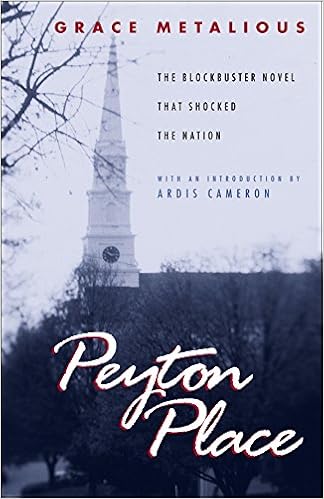
            Episode three here we go! This scandalous 1950s novel was referenced by none other than Rory’s grandfather, Richard Gilmore. Kudos to Richard for being familiar with what many would consider a woman’s novel. I had heard the title Peyton Place before, but was not familiar with the novel or the story. When I saw it appear on the list, I had to search several libraries to find a copy of the book as it isn’t one that is incredibly popular with today’s readers. But, boy, in its day was it a well known book…and not exactly for good reasons.

Peyton Place: The Fifty Shades of Grey of the 1950s
            If I were to compare the impact of Peyton Place to contemporary literary situation, I would compare it to that of Fifty Shades of Grey. Now, Peyton Place isn’t about BDSM and is not an erotic novel, but it sparked a similar controversy amongst mass readers. If you remember whenFifty Shades of Grey came out, you probably remember that it was the book that EVERYBODY was talking about. It was the book everyone wanted to read, but was too embarrassed to buy or read it in public. Mothers would hide their books in their nightstands and teenagers would eventually steal their mother’s copy and read it under the confines of their comforters. Many women, of all ages, did the exact same thing with Peyton Place.
            When Peyton Place was first published in 1956, it shocked people because it discussed taboo topics such as abortion, rape, incest, premarital sex, affairs, etc. Metalious also wrote graphic sex scenes which showed women as more than passive bystanders. She depicted women initiating and enjoying sex; something that was missing from other popular novels of the day. It caused such an uproar that entire towns banned the novel and libraries had signs out front saying they did not have copies of the book (maybe that is why it was so hard for me to find a copy). Ardis Cameron explains the entire history in his introduction to “the blockbuster novel that shocked the nation” (as the cover says). The book didn’t really shock me, but I read it sixty years after it was published and these “taboo” topics are talked about in modern literature. And if you were wondering, no,  Fifty Shades of Grey did not shock me. You want to know what book did shock me the first time I read it: Toni Morrison’s Beloved. But that is a story for another day.

“You must be crazy to teach”
            You would not believe how many times I have heard some variation of the above phrase. Most of the time this phrase is preceded with “I don’t know how you do it. I could never do it.” On one hand they call me crazy, on the other, they give me some credit for doing what I do. I must admit, though, that there is some truth to this statement and people have realized this for a long time. Grace Metalious realizes this in her novel. Amongst all her legitimate characters, there is one sane schoolteacher. The character of Constance, who I find to be the most “crazy” makes a remark about the teacher: “My God! Thought Constance, and there are still apparently sane people in this world who take up school teaching by choice! (49). I think this statement explains how us teachers must be crazy. We aren’t crazy for doing the teaching, most of us are actually quite smart; we are crazy because we CHOOSE to teach. Most of us chose this path and even when we bitch and complain about it, we still love it. This is where we confuse people. As the saying goes, we aren’t crazy because we teach, we are crazy because we like it.


Is it easier to read and write than it is to live?
            The character that resonated with me the most was Allison. She was introverted, creative, sensitive, and passionate about her work. This sounds quite a bit like me. I am a bit more positive than Allison and more social than her, but I connected to her because of her passion for reading and writing. One of my favorite exchanges in this novel is between Allison and her stepfather, Tom. Tom says to her, “The main difference is that it is easier to read or write than to live” (370). Allison responds that the main difference has always been that writing and reading are less painful” (370). This exchange is difficult for me to talk about because I have always found solace in reading and writing. I don’t want to say that it is easer to read or write than to live because that seems to belittle these things. Is it saying that reading and writing are not living? And that those who choose to spend their time reading and writing are not living? I do not like these thoughts. By reading, I get to live many lives and be a part of stories and events I could never do in my every day life as Leigh. By writing, I get to dive into my deepest thoughts and express myself in a way that only I can. Maybe reading and writing are not as painful as living because losing someone in real life whether through death or falling out is a million times more painful than reading about it on a page. But, for me, writing can be painful. Of course, the process can be difficult. It is hard to find the right words to put on the page and sometimes you just hit a block. The most painful part of writing, though, is being honest and getting in touch with your emotions. Sometimes when you write, you have to relive events you want to forget, you image the worst scenarios possible, and you have to be vulnerable. Sharing your writing with people is a scary thing and imagining what they are thinking as they are reading your writing is a horrible thing to imagine.

Overall, I enjoyed this book, but it didn’t strike me in a way that makes me want to scream I LOVE IT, I LOVE IT, I LOVE IT. If I was twenty-five in 1956, however, I would have eaten this novel up.


Next Up: A Mencken’s Chrestomathy by H. R. Mencken. Should be a taste of something different.

Pictures
Book Cover https://images-na.ssl-images amazon.com/images/I/515bJ5j4FxL._SX322_BO1,204,203,200_.jpg
Movie Poster https://images-na.ssl-images-amazon.com/images/M/MV5BZTNjYWU5NmEtNGFjNC00ZjlmLWExZTEtMzY5MzA1MWE4ZDI2XkEyXkFqcGdeQXVyMzk3NTUwOQ@@._V1_.jpg
Grace Metalious Writing https://photos.vanityfair.com/2015/06/30/55930e3efa1d030e0ac6a2be_grace-metalious-do-not-use.jpg

Thursday, August 24, 2017

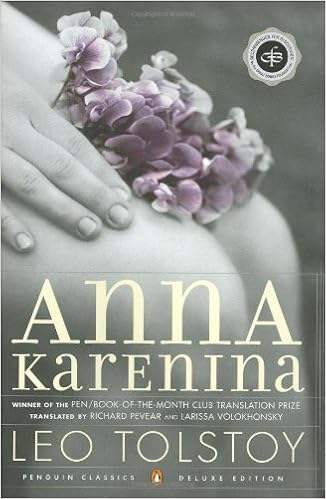
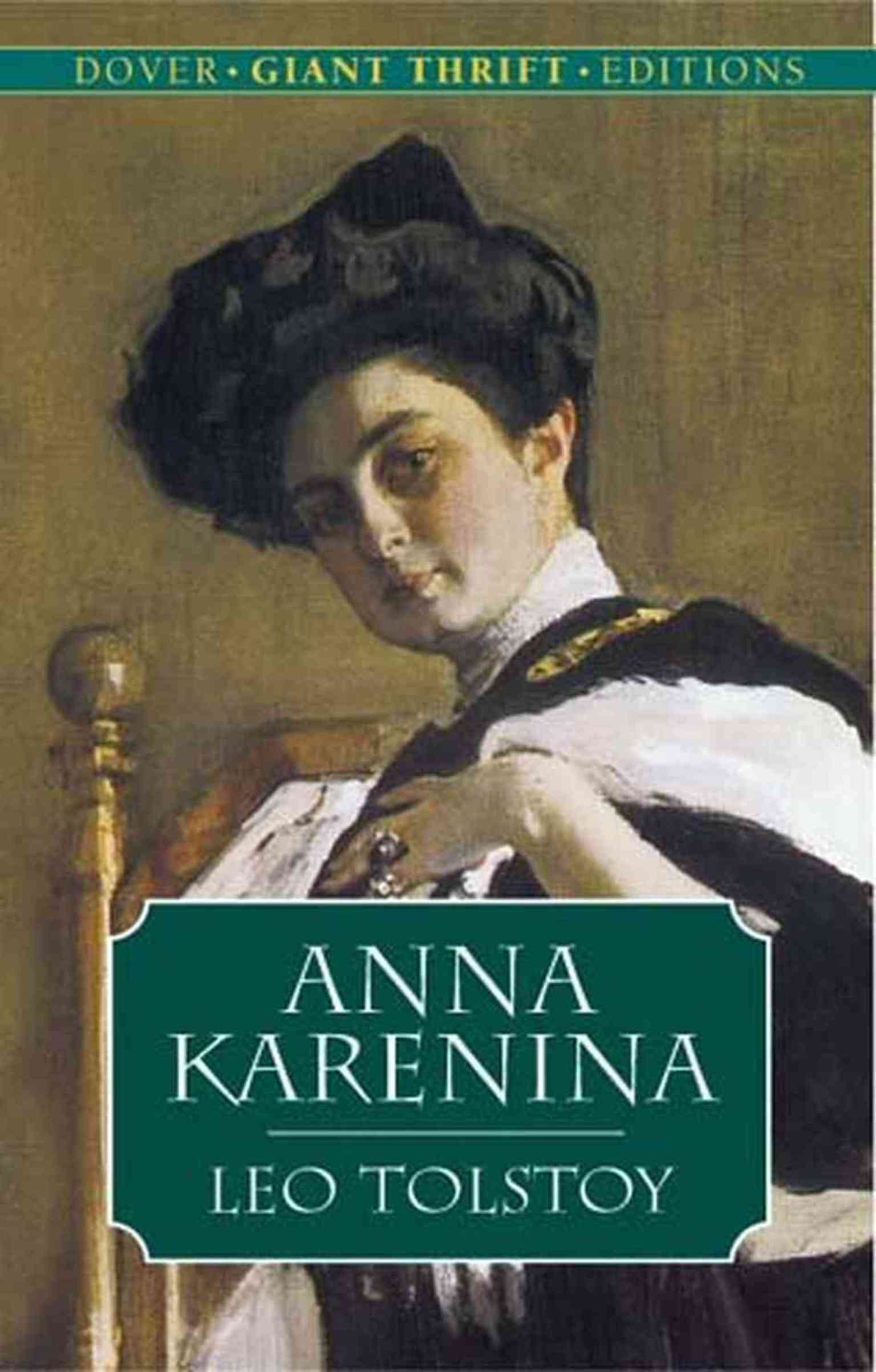
Book #18 Anna Karenina by Leo Tolstoy


Does this look like a butt to anybody else?
            “All happy families are alike, every unhappy family is unhappy in its own way,” is perhaps one of the most famous lines in all of literature and, thus, opens Leo Tolstoy’s massive Russian novel Anna Karenina. You would be lying if you have not heard some variation of that line above; it is used in reference to many stories (and families) today. After all, you don’t go to the movies or turn on your TV to watch a happy family live out their days. That would be boring. As much as all of us loves to see a happy ending, we like the road to happiness to be as complicated as possible. But if you are Tolstoy, you don’t want a pretty house on the hills to be the end of the road. No, you want the car to crash and everybody to end up in a burning blaze. Sorry to be depressing, but Anna Karenina does not have a happy ending.

            Believe it or not, despite this, I am excited to write this post. Even though I did not like this book, I feel like I have a lot to say. (I know, you are probably thinking “Leigh, do you like any books?” Yes, I do. I’ve just read a lot of clunkers lately). Rather than focusing on all the dreary and depressing aspects of this novel and how frustrating a found the characters, I am choosing to focus on the positive aspects. I feel like I need it and probably you too especially, with the kinds of things you see on the news lately.

            One of my favorite lines from this novel comes hiding in the middle of the dense eight hundred-something page novel from Karenin to his young son. He tells him “If you love the work, you will find your reward in that,” (Tolstoy 52). Now, this concept is nothing new to us. We hope that we can find a job doing what we love because if you have to spend your time working, you may as well be doing something you enjoy. No one wants to spend their time doing something they hate or they are not passionate about. But how many people do you know don’t find some happiness in their work? How many people view their job as simply a place of employment; a way to get money? And how many people do you know are actually passionate about what they do day to day even when it is tough? I am someone who is lucky to do what I am passionate about and enjoy doing it. I am not saying that I have trying days or trying weeks or even trying months. Being a teacher is extremely draining and if you are someone like me, who puts their heart into everything they do, you can take mishaps and one foul student’s remarks extremely personally. Despite the difficulties, I can’t picture myself doing anything else and there are so many students who show me kindness and gratitude on a daily basis. There have been days that I have gone home crying so upset over something that has happened at work, but there are also times I find myself in tears because a student has told me about the impact I have made. One student told me at the end of my first year teaching that he never thought he could write a full blown essay at the beginning of the year. By the end of the year, he said he felt confident writing a pretty good essay because of the way I broke it down for him. Moments like these make my heart warm and is the reason why I do what I do. I like helping my students uncover the strength and talents they never knew they had.

            Many of the characters struggle with finding happiness in this novel. No one is happy in their relationships and when it seems like they are, they question it. For example, Levin finally marries the girl he has been pining over for years (Kitty) and his reaction is “Wait, this is it?” Anna runs off with her lover Vronsky and she becomes depressed because she worries that he will have an affair with someone else. These characters just cannot let themselves be happy. I think happiness is somewhat of a choice, if not a complete choice. You don’t wake up one morning and you are magically happy without any effort. For me, happiness is a choice I have to make every day. It is so easy to let yourself get bogged down by what you don’t have and what other people have therefore limiting your happiness. Society has set standards of what it means to be happy; of what and who you need to have in your life in order to be happy. This can be stressful. It is hard to do, but when you start asking yourself what you actually enjoy and what actually makes you feel happy, you can learn a lot about yourself. For me, I often feel the pressure of making others happy, both in my job and in my personal life, but I realized that I am never going to make other people happy if I don’t make sure I am happy first. That is why I take time for myself. I make sure to read a chapter of a book before bed during the hectic days of coaching and teaching because holding a book instantly relaxes me. I keep a relatively consistent yoga practice because it makes me feel strong both physically and emotionally. I make myself some break and bake cookies when I have a chocolate craving because I know it is important to treat myself. I choose to take care of me because I know I am a more beneficial member of society when I am happy.

I know I have gone off on a tangent with this post and have not really focused on the literary aspects of Anna Karenina (I could’ve bored y’all to death on literary realism), but I felt like I had more important points to hit. This post was an important one for me because I really felt like sharing some positivity and encouragement, as it is the start of a new school year. Even those of us who are not teachers or students still need a little boost around this time. I hope you all are happy that and part of that happiness comes from within. You all deserve that happiness <3


Random Tidbits
- I read the sequel to The Shining called Doctor Sleep. It was a very enjoyable book, but it is very different than its predecessor. It holds a faster pace and brings in a different sort of supernatural element. It won’t be a classic like The Shining, but it doesn’t need to be.
- Anna Karenina concludes the books listed in episode two of Gilmore Girls. Only two episodes down in about a hundred something episodes. I got a long way to go.

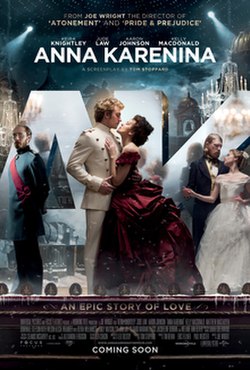
- I wrote this post while watching the 2012 film adaptation of Anna Karenina with Keira Knightly (boy does she do a lot of period pieces). Honestly, I didn’t pay attention too much, but the music was very soothing.


Pictures
Book Cover 1:https://images-na.ssl-images-amazon.com/images/I/51vPf2CfSEL._SX324_BO1,204,203,200_.jpg
Book Cover 2:http://i.huffpost.com/gen/1339337/images/o-ANNA-KARENINA-facebook.jpg
Movie Poster: https://upload.wikimedia.org/wikipedia/en/thumb/7/75/AnnaKarenina2012Poster.jpg/250px-AnnaKarenina2012Poster.jpg

Tuesday, August 1, 2017

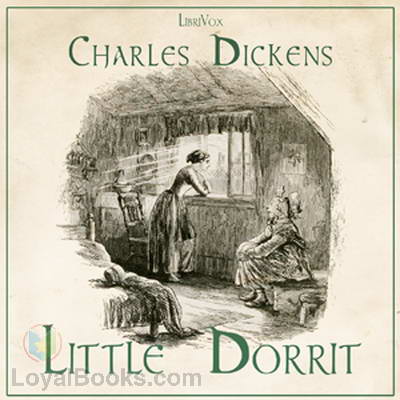
Book #17: Little Dorrit by Charles Dickins

Book #17: Little Dorrit by Charles Dickens

Ranking Dickens
            At this point in the challenge, Charles Dickens seems like an old friend. If you need a refresher, I have already read David Copperfield, Great Expectations, and A Tale of Two Cities. Finally, I have made it to Little Dorrit, the last Dickens’ novel I have to read for awhile. I have previously mentioned that Dickens is not the best author to binge read and his novels are best read with a decent amount of space between them. However, since I am extremely stubborn, I made myself read the books on this list in the order they appear in Gilmore Girls episodes and ended up reading these four in the span of six months. This was exhausting because Dickens isn’t exactly light reading. I suppose this is why Dickens’ novels were often originally published in monthly installments such as the case with Little Dorrit. Part of me sees this as smart as it keeps the reader engaged and wanting more, but it also drags out the process. Dickens isn’t like an episode of Scandal; you don’t necessarily have the desire to eagerly await the next installment with a big glass of wine.

            Out of the four Dickens books I have read so far, my rankings stand as: A Tale of Two Cities, Great Expectations, David Copperfield, Little Dorrit. I believe that Little Dorrit is behind David
Copperfield merely because I read it afterwards. If I read Little Dorrit before David Copperfield, I probably would have liked it more. Most likely, I was burnt out from reading so much Dickens that by the time I came to this book I was just done with him. A lot of the themes and troupes Dickins uses in Little Dorrit, he does so much better in his other books. For example, the main female character of Amy “Little” Dorrit is reminiscent of Dora in David Copperfield. Little Dorrit’s father spends most of his life imprisoned similar to Lucie’s father in A Tale of Two Cities. Little Dorrit and her father are close in a similar manner to Lucie and her father. Arthur Clennam’s “mother” is similar in nature to the mean Mrs. Havisham in Great Expecatations. Furthermore, Amy’s older sister Fanny treats her the same way Pip’s older sister treats him. If Dickens’ other novels were not so great (he really did himself in on this one), maybe Little Dorrit would have stood a chance with me.

Money, Money, Money! (Yes, I am quoting an ABBA song…)
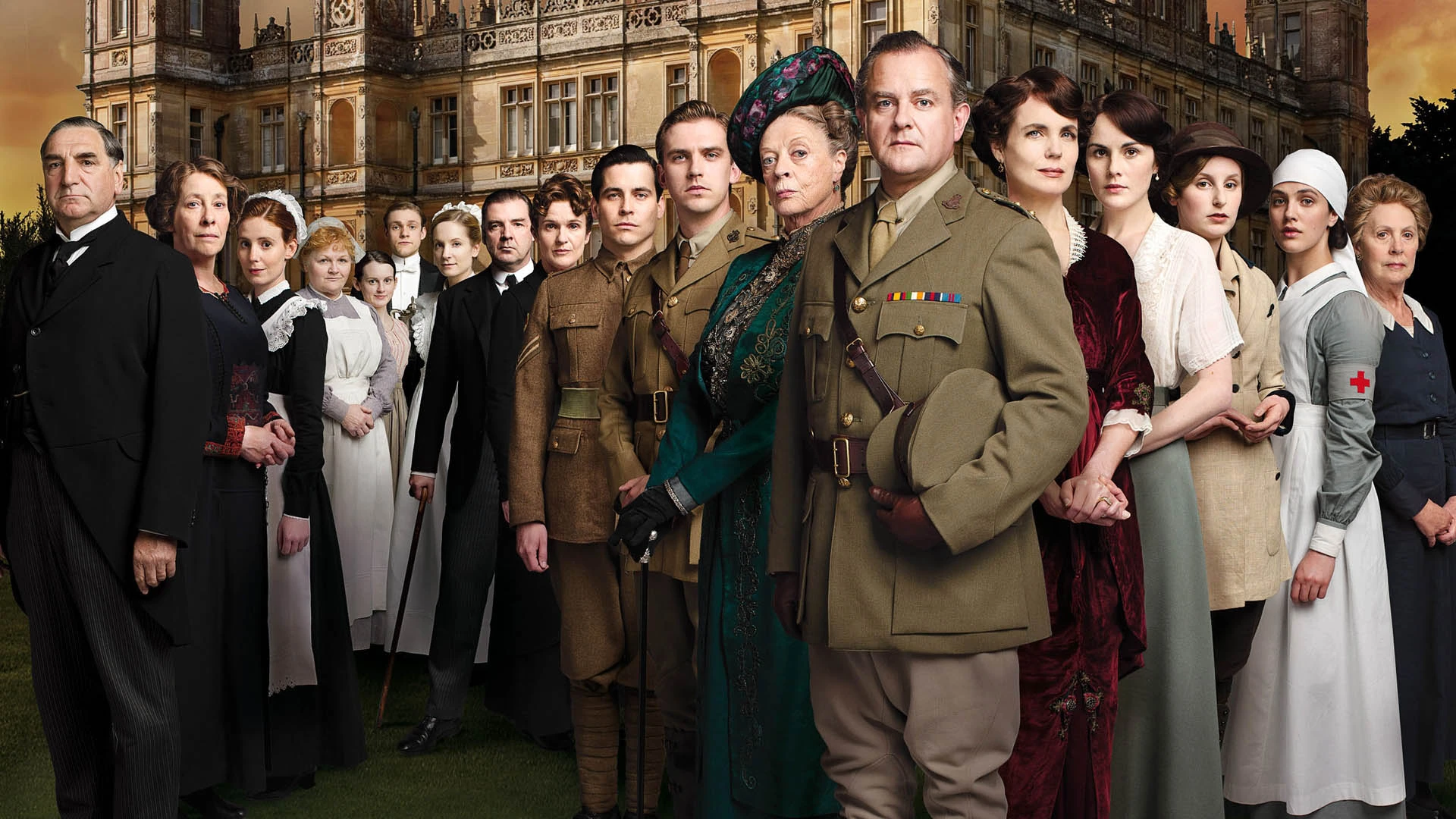
Since Dickens’ is often making a social commentary about money and class in his novels, I thought it be a convenient time to mention my new obsession: Downton Abbey. I know, I am about seven years too late to the party and am going off on a complete tangent here. Everybody has seen this show years ago, but TOO BAD I just started watching it now. I don’t know why I was so resistant to it for so long (there is my stubbornness again) because it is extremely addicting. But clouded under all the drama is a commentary on the British class system and money…just like Dickens! This shows how certain themes and motifs are used continuously throughout story telling. Also, reading Dickens and watching Downton Abbey at the same time made me feel very British and makes me yearn for England. I’ve been there once for a Shakespeare study tour (you’ll hear all about this when we read all that Shakespeare! Yay!) and want to go back desperately. But the more English works I read and more English television shows I watch, the more I attempt to speak in a British accent. I am so sorry to all my friends who have to put up with this. My sister tells me "Leigh, your British accent is you just speaking faster in a higher octave." Sigh....

Gilmore Boys
Since Little Dorrit is centered around a father and daughter relationship, I thought it would be a good time to bring up the father-daughter relationships in Gilmore Girls. We always focus on the mother-daughter relationships in the show, but the father-daughter ones are just as strong. Lorelei and Richard have a complex relationship but at the core, both would do anything for the other. Richard’s presence is huge over the course of the series and his death is omnipresent in the revival. Rory and Christopher’s relationship is not explored as in depth. Christopher is present in Rory’s life, but her loyalties usually side with her mother as she was the one who raised her. I would argue that Luke is more of a father figure to Rory. After all, he is the one that feeds her the most. I feel very lucky that I have such a good relationship with my father; I always have. 


Fun fact: In October 2011, The Guardian released the results of a poll in which readers voted for their favorite Dickens’ novel. Great Expectations won (no surprise, it is pretty great) followed by Bleak House (I’ve never read it, but one of my college English professors always raved about it). David Copperfield won third which surprises me and A Tale of Two Cities made it at four. Little Dorrit was ranked around 11 which isn’t too surprising as many people haven’t heard of it nor is it extremely memorable. It seems that many people had a similar opinion as I did.

Charles, my friend, it has been a fun six months. I've enjoyed (sort of) your stories of poor orphans, imprisoned fathers, and women with fetishes for doppelgängers. But, now, it is time to return to your admirer Leo Tolstoy and finish reading Anna Karenina. Wish me luck!  

Pictures
1.http://www.loyalbooks.com/image/detail/Little-Dorrit.jpg
2.https://a.wattpad.com/cover/111850375-352-k786598.jpg
3. http://vignette4.wikia.nocookie.net/downtonabbey/images/8/83/Downton-Abbey-series-2-cast-promo.jpg/revision/latest?cb=20131128023506

Friday, June 30, 2017

Book #16 War and Peace by Leo Tolstoy

            I did it. I read all 1,215 pages of Tolstoy’s Russian masterpiece. Although, I would not call this book a masterpiece by any means. Honestly, it was one of the most boring and difficult books I have ever read. It was all over the place and inconsistent and just too long for its own sake. It would not surprise me if the only reason this book is considered a “classic” and remembered is because it is one of the longest books ever written.
            We are still sitting in Rory’s first class at Chilton where the teacher rambles off a list of works in order to compare how English society influenced Russian society in the 19th century, specifically in literature. I assume that this is a history class and literature is being used as an example. And Mr. Medina is Rory’s English teacher (and Lorelai’s future love interest) and this man is clearly not him. The teacher says to the class: “As Tolstoy commenced writing both War and Peace and Anna Karenina, Count Leo would turn to..” Paris responds with David Copperfield. It is not shocking, then, that if I disliked David Copperfield that I also disliked War and Peace. I am shocked, though, that these novels are being discussed in a tenth grade English class. I can tell you that my classes very rarely go this way. The tenth graders in this class must be some form of robots as many of my students claim they have never read a book let alone know that Tolstoy was influenced by Dickens.
            When I started reading War and Peace, I was intimidated and worried how much it would impact my fun reading (I usually have two books going at once), but somehow I got through it. I found the book difficult to follow for several reasons. 1. I was reading it in translation. Obviously, War and Peace was originally written in Russian so some aspects of the novel are bound to be lost in translation. The translation I read was very good, but I had to read a lot of footnotes to understand what was going on. 2. This book didn't know what it wanted to be. We claim War and Peace is a novel, but it is not. It tries to be a novel, a historical account, a philosophical discussion, and a poem all at once. Even Tolstoy said it is “not a novel, even less it a poem, and still less a historical context.” It seems to me that Tolstoy felt whatever he felt like at the moment in order to create the longest book he could. I think it is great that he wrote what he wanted to, but that doesn’t mean other people want to read it. So that brings me to this question: Does anybody out there call War and Peace their favorite book? Do they take it out when they are feeling sad to make them feel better? Is it the one they eagerly tell their friends about and urge them to read? Someone please tell me because I would really like to know the answer to this question


Now, I don’t really feel like rambling on about this book since it was tedious enough to read it so here is a list of my random thoughts:
 - Tolstoy had his wife copy the manuscript for this book seven times. Let’s do the math here: 1215 pages X 7 = 8505 pages. If that’s not love, I don’t know what is.
- I have a strange love of footnotes. I don’t know why…but even that couldn’t save this book for me.
- I had a lot of flashbacks to my AP European history class during my junior year of high school. Some of those were good memories, while others were just plain stressful.
- At one point in the novel, one character tortured another character by slitting his nostrils. My response was “Whaaaaaaa?”
- Just because something is bigger does not always mean it is better. As I tell my students, just because you write more does not mean that their essay is going to get an A. This book shows that more words does not equal a better book. 


Next Book: Little Dorrit by Charles Dickens. My last Dickens for a while! Whooohooo!!!!

Pictures
Book Cover: http://i.gr-assets.com/images/S/compressed.photo.goodreads.com/books/1320544190i/290979._UY200_.jpg
Image http://7-themes.com/data_images/collection/1/4426035-war-and-peace-wallpapers.png