Showing posts with label teaching. Show all posts

Sunday, April 7, 2019

Book #36: A Streetcar Named Desire by Tennessee Williams


Book #36: A Streetcar Named Desire by Tennessee Williams

            Reading a book in preparation of teaching it is a lot different from reading a book for the pleasure of doing so. I read A Streetcar Named Desire last fall because I was teaching it to my AP Literature students. I felt a little guilty for never reading it before (somehow I never had to read it in high school or college) and reading it for the first time right before I planned on teaching it. Sometimes as a teacher, I feel like I need to be an expert on what I teach, or at least pretend to me. My students expect me to know the answers for everything, every definition of EVERY SINGLE word (like I am a walking dictionary), and to tell them there is an exact way to analyze literature. They struggle to understand that there is not always one concrete answer when it comes to analyzing a text, but there sure as hell can be a wrong answer. It frustrates them to no end. So when I go into a book with the intention of teaching it, I have to anticipate what my students will think, question, and argue about (this group loves to argue about EVERYTHING!). So Streetcar is an entertaining play and I enjoyed reading it, but reading it with the intention of teaching it took a little bit of the fun out of it for me.
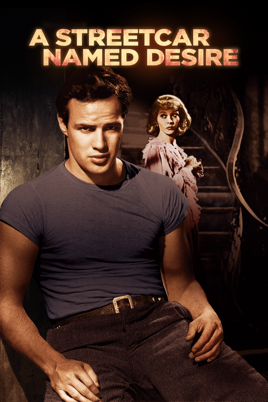
Even though Stanley is a jerk, Marlon Brando is
quite hot. 

            Many people think of the Marlon Brando film version of A Streetcar Named Desire where he shouts “Stella!” at the top of his lungs from the New Orleans’ streets. This scene is referenced several times throughout the series, and is a staple of pop culture. However, Lane refers to Rory as another one of the play’s characters in this exchange. “Rory: He’s not my boyfriend. Lane: Really? Rory: No. Lane: What is he then? Rory: He’s my…gentleman caller. Lane: OK, Blanche.” For the purpose of this post, we are going to assume that Lane is referring to Blanche from A Streetcar Named Desire and not from Golden Girls (that would be a different post entirely).
            A Streetcar Named Desire follows the characters of Blanche, Stella, and Stanley in the French Quarters of New Orleans. Blanche, Stella’s sister, shows up at Stella and Stanley’s doorstep and immediately makes herself at home. At the onset of the play, Blanche is extremely unlikable. She crafts a web of lies and is purposely condescending to Stella and her husband to mask her insecurities around her own life. You see, Blanche lost her family home (Belle Reve) because she has been careless with money and lost her job as a teacher due to inappropriate relations with a student. It is also later revealed that Blanche stayed at a hotel with links to prostitution and revealed her husband’s homosexuality, leading to his suicide. Blanche does not reveal any of this to her sister, though. She acts like Stella and Stanley’s apartment is too small for her and that Stanley, himself, isn’t high enough quality for Stella. She almost thinks that by acting in this way and pretending that these events never happened, that they never did. She casts a false light upon herself (hence the lampshade motif – my students will know what that means).
            The other characters in the play, however, are not much better. Stanley is abusive towards Stella fairly early on in the play. He belittles her and constantly screams at her (STELLA). Stella doesn't seem to have a problem with this. She has accepted her place in their relationship, and complies with Stanley’s whims. It is frustrating that Stella can’t stand up for herself. Blanche can, though. She has no problem calling Stanley out and challenging him. But if you are familiar with the play, you know that it does her no good in the end.
            The majority of my students missed what exactly happened at the climatic scene between Blanche and Stanley at the end. The action is not explicitly stated, but inferred. This lead to a lot of frustration from my students (“What do you mean he did that? If it doesn’t say it happened, you can’t prove it?!  So does this mean I can argue that something else happened if I can infer it?!”). I won’t reveal the ending here, but I will warn that it is a sensitive topic.
            A Streetcar Named Desire is a quick and easy read on the surface level, but reveals much about character motivations and desires. Heck, I read about 22 AP Lit essays just on the topic. I wonder what Rory would have written?


Movie Poster - https://is2-ssl.mzstatic.com/image/thumb/Video69/v4/81/fc/4c/81fc4c96-f620-6b1b-5fca-16d2f361617b/pr_source.lsr/268x0w.png

Sunday, February 24, 2019

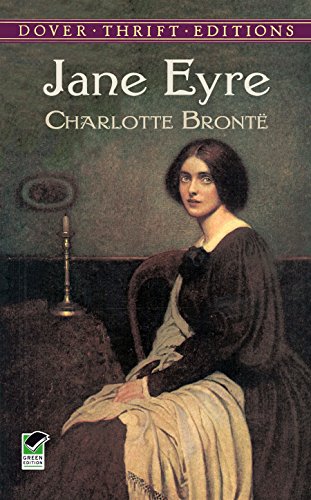
Book #35: Jane Eyre by Charlotte Bronte


Jane Eyre
was just the book I needed to restore my faith in this challenge! The past several books I have read for this challenge were difficult for me to get through and enjoy. Fear and Loathing in Las Vegas was clearly a one star pick for me and Northanger Abbey felt like a bore. Even before those books, it had been a while since I read a book I loooooved from this list. If you were wondering, my favorites thus far (that I had never read before this challenge) are Rebecca by Daphne Du Maurier, Great Expectations by Charles Dickens, A Tale of Two Cities by Dickens, and The Tragedy of Richard III by Shakespeare. It has been over a year since I have read any of those, so it has been awhile since I really enjoyed a book from this list. I am happy to say Jane Eyre is one of my new favorites.

            Jane Eyre is a staple of English Literature and I do not know how I got to the age of 26 without reading it. It was always one I knew I would read some day and kept pushing it off. Thank goodness for this challenge! Rory recommends Jane Eyre to Dean in episode 8 after he returns her copy of Northanger Abbey. Even after he claims he enjoys books like Fear and Loathing in Las Vegas (bleh), she still recommends him some Charlotte Bronte. I find this a bit inconsiderate of Rory. You shouldn’t force someone to read a book you love when it is clear it is not something the other person desires to read. This may seem a bit hypocritical of me because I do make a career out of forcing high school students to read books they do not want to read. It is for their own good, though. And how many of them actually read the entire book? I know most of them resort to Spark Notes, Schmoop, Cliff Notes (I know them all) to scrape by. It makes me sad that very few of them know the joy of reading. If they had to read Jane Eyre, I am not sure how many would enjoy it because it does read at a slower pace, but I found that enjoyable in this instance.
            I have to say that Jane Eyre is one of the most enjoyable classics I have read in awhile. Some may say it is dark and melancholy, but I think that dark Victorian tone makes it fun to read. It also fits with this time of year (it has been so overcast and cold lately). Jane is a much more relatable character than any of the Austen heroines. At the beginning of the novel, Jane is living with her aunt and cousins. She is treated like a burden because they make it clear that she is unwelcomed and unloved. Her uncle was the one who adopted her when she was orphaned, but he died shortly after. Jane grew up without love and comfort. She didn’t take that poor, pitiful me attitude seen so often in tales; she knew what she deserved and how she should be treated. Very early on, we see Jane stand up for herself. Even when Jane was sent to boarding school (where she wasn’t treated much better), Jane followed what she thought was right even when authority figures claimed she was wrong. Despite these hardships and being treated like trash, Jane still treats others with compassion. She risks her health by staying with her friend and holding her as she dies from tuberculosis. If you know the ending, you also know that Jane loves unconditionally. She doesn’t care about money or about appearances; she cares about what is on the inside.
            This brings me to the topic of Mr. Rochester. I love the romance between Jane and Mr. Rochester. Maybe I just love forbidden romances. Or maybe I just like grumpy men. I don’t know. It makes sense because I love the Beast in Beauty and the Beast. Due to social status and an age difference, Jane and Mr. Rochester shouldn’t be together. Jane is the governess to his young ward, and, technically, Mr. Rochester is still married to his crazy wife he hides in his attic. [SPOILER] He makes the miscalculated call to propose to Jane and keep that fact a secret. Unfortunately (or fortunately to Jane) his crazy wife’s brother reveals the crazy wife’s existence to Jane right as she is about to marry Mr. Rochester. Mr. Rochester tries to convince Jane to marry him anyways. He tries to rationalize that he isn’t really married to his wife since she is mentally unstable and she lives in the attic. He got himself in quite a pickle. In every love story, there must be a hurdle, and in this story, that hurdle is a crazy wife in an attic. (I have never used the phrase crazy wife this often before).But when you think about it, doesn’t everyone have a “crazy wife” in their “attic”? What I mean is: everyone has some secret, insecurity, or dark thoughts they keep hidden in the far most corner of their minds. We don’t have a literal crazy wife in our attic, but there is always something we shy away from sharing with the ones we love. There is an abundance of psychological theory applied to this idea in Jane Eyre.
Of course I pictured Mr. Rochester as Michael Fassbender

            While the novel does take several dark turns, Bronte makes sure to give her novel a happy ending. After years apart, Jane returns to Mr. Rochester after learning that his wife died from jumping out a window. However, everything isn’t neat and tidy because his wife set his house on fire, burning and blinding Mr. Rochester in the process. He isn’t the handsome and charming man he once was, but Jane still loves him. And thus comes one of the most famous lines: “Reader, I married him.” Jane has no qualms about marrying him now that he is not bound by the ties of another marriage. She also does not care about physical appearances. What she loves about Mr. Rochester is his mind and heart, not how he looks. The fact that he is blind, lost a hand, and is not as handsome any more does not bother Jane. And I think that is why I love this story and their romance. Yes, there are many flaws in their relationship, but it is also very pure. When it comes down to it, they love each other for what is inside and not physical appearances or social status. They also find their way back together after tremendous hardship. I do love a story with a happy ending!

Pictures
Book Cover - https://www.google.com/imgres?imgurl=https%3A%2F%2Fimages-na.ssl-images-amazon.com%2Fimages%2FI%2F51KPlGsw7-L.jpg&imgrefurl=https%3A%2F%2Fwww.amazon.com%2FJane-Eyre-Dover-Thrift-Editions-ebook%2Fdp%2FB008TVGG8C&docid=UmSAk5BRpnzl2M&tbnid=-AHsFeP5cMqGJM%3A&vet=10ahUKEwiwsq2x5tTgAhVLiOAKHX4ZBewQMwhrKAEwAQ..i&w=311&h=500&bih=642&biw=1280&q=jane%20eyre&ved=0ahUKEwiwsq2x5tTgAhVLiOAKHX4ZBewQMwhrKAEwAQ&iact=mrc&uact=8
Movie Still - https://s3.amazonaws.com/thumbnails.thecrimson.com/photos/2011/03/21/220237_1249081.jpg.800x533_q95_crop-smart_upscale.jpg


Friday, June 22, 2018

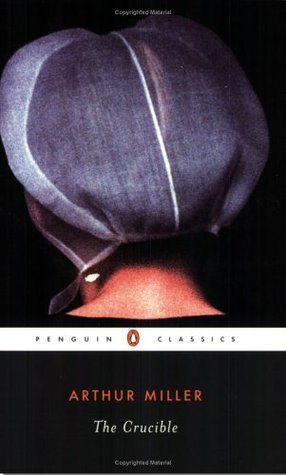
Book #31: The Crucible by Arthur Miller

Who isn’t intrigued by the idea of witches, secret love affairs, secrets, and lies? Well, maybe not in real life, but they sure are entertaining to watch. The Crucible by Arthur Miller is a play depicting the events of the Salem Witch Trials during the late 1600s. The play was originally a flop when it first premiered, but later became one of Miller’s most well known plays. I first read The Crucible when I was in 10th grade; it was part of our American literature curriculum. I remember enjoying the play as a student and was extra enthralled in English class while we read it. Not that I wasn’t extra enthralled the rest of the time.


Why is He So Dirty?: Teaching The Crucible in the Modern Age
            This year, I taught The Crucible to my one class of juniors. I was so excited to teach this play! I had so many ideas of what I wanted to do with it and what I wanted to discuss with my students. Did my students share in my excitement? Absolutely not. This is how it went down:

            Me: Guys, we are going to start reading The Crucible today! It’s about the Salem              Witch Trials! There are witches and drama and people burning at the stake! Isn’t               that exciting?!
             Student 1 slams head down on desk and groans loudly.
             Student 2 stares at me with a “you are crazy” look smacking her gum loudly.
             Student 3 falls asleep sitting up, drool dripping down their face.
 
Thank God for Student 4 who is nodding vigorously and cautiously smiling at me. It is clear that he is only smiling and nodding to make me feel better. The moral of the story here is that it is difficult to get 16 year olds to be excited about literature at 7:30 am. I tried, though.

            With this particular group of students, there was no way they would even read the play if we did not read it aloud. This did not proceed like I imagined it. There were several problems:
            

1. The students would forget which character they were or zone out when it was their turn to read. So whenever it was someone’s turn to read, they prefaced each line with “Oh shit.” Every. Single. Time. I kept yelling “THAT IS NOT IN THE SKRIPT! DO NOT SAY THAT!” Did they ever stop? No.

2. Some students love to be the center of attention and decide that they will read aloud every character that starts with the letter P. If you are familiar with The Crucible, you know that is a decent amount of characters (Parris, Proctor, Putnam). Whenever another student volunteers to read or accidentally read a P role, they will shout “No ‘expletive’ that’s my role!” At least they are excited about something…

3. Sometimes the students realize that the text is actually interesting. However, their reactions while reading are not always appropriate. Exhibit A: "So it’s saying that Abigail was sleeping with Proctor and his is, like, 30?! That’s so gross! He is so old! This b*!&% is cray!”

Image result for the crucible
Look's so dirty, am I right?
As you can see, teaching the play was not what I was expecting with this group of students. I was very entertained while reading this with them. While they are not always the most studious group of teenagers, they did actually begin to enjoy the text about halfway through it. They also liked watching the movie. That’s probably why they put up with reading the book. However, watching the movie presented all sorts of other issues. The students just could not get over why John Proctor looked so dirty. At least three times a day, they commented: “Why won’t he just take a shower?” It didn’t matter that I told them that the play took place in the 1600s and they didn’t have running water back then. They still could not get over that he looked dirty. That was their main take away from The Crucible.

The Witch Hunt
The Crucible was originally written as an allegory for the Red Scare in the 1950s, referring to the McCarthy trials which was a hunt to find communists hiding in plain site. Arthur Miller was called to the stand during these trials and asked to name people he thought were communists. Miller refused to do so despite what it might do to his reputation. This mirrors Proctor’s predicament in The Crucible. His wife is first accused of being a witch and when Proctor begins to ask questions about the accuser, he is then accused. The only way for Proctor to not be hanged as a witch is to admit to being a witch even though it would be a lie. His only options are to lie and say he is a witch so he can live or to tell the truth and die. Is it better to survive or to die morally? It’s a tough question. Human being are born with the instinct for survival yet we have a moral compass. What happens when these two things are at odds?
            This idea of a witch hunt is applicable to many situations. My students could relate to this because they all deal with rumors and gossips. It is so easy for someone to say something that is untrue and for that rumor to spread and transform over time. False accusations are very common when it is a he said/she said type situation. I can not tell you how many times my juniors would randomly should out "THIS IS HOW LIKE THAT ONE TIME MY EX..." My response was always "I DON'T WANT TO KNOW!" because, trust me, sometimes we are just better off not knowing what they do in their free time. 


In your face, Abigail!

Other Thoughts
- Lorelai mentions The Crucible (probably the movie version) to Luke when she says “Not gonna talk about how good you’d look dressed as one of the guys from The Crucible.” She obviously doesn’t have the same problem as my students.
- Liam Neeson played John Proctor in the 2002 Broadway revival of the play and we all know how we feel about Liam Neeson. I would watch that man in anything.
- I didn’t talk much about Abigail and the girls in this post, but I just have to say that this play shows how teenage girls can be the worst. I have been one. I deal with them everyday. I know. Sometimes they can be the sweetest, but also they can be very scary. The Crucible shows this first hand.

Pictures
- Book Cover: https://www.google.com/url?sa=i&rct=j&q=&esrc=s&source=images&cd=&cad=rja&uact=8&ved=2ahUKEwiX7_HRhujbAhVPzlkKHUEACV0QjRx6BAgBEAU&url=https%3A%2F%2Fwww.goodreads.com%2Fbook%2Fshow%2F17250.The_Crucible&psig=AOvVaw3InrROTXmMiEUEdfWU7rdS&ust=1529783712041474
- Proctor: http://static.tvtropes.org/pmwiki/pub/images/0df639c8d68299560f3d2ce9e90b0556.jpg- Meme:http://imoviequotes.com/wp-content/uploads/2015/03/1-the-crucible-quotes.gif

Saturday, October 7, 2017

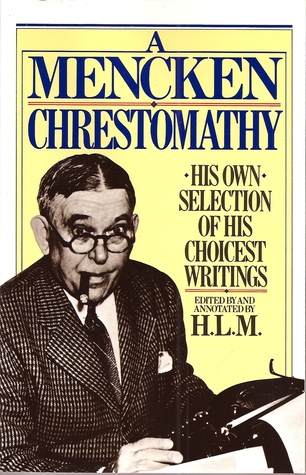
Book #20: A Mencken Chrestomathy by H. L. Mencken

Finding a copy of this book was a tough mission. Out of all the books on the list thus far, this was by far the most difficult to track down. If you recall, The Mistress of Mellyn was also difficult and required me to order a copy off of Amazon. At least Amazon had a large number of copies of that book! When I began searching for A Mencken Chrestomathy, I was unable to locate it any of the public libraries I used nor was it listed in any main chain bookstore. Thus, I went to my trusty friend Amazon Prime and Amazon had to track down a used copy of this book all the way from England to send to me for the price of $8.99! Some people may say this is too much to pay for a book, but I had a gift card and free shipping so I say it is a win! By the time I finally got my hands on the book, I was ready for the task ahead of me and it was not an easy one…

            How many of you can say you have heard of H. L. Menken?... Anyone? ... Anyone?...That’s what I thought. I, for one, have never heard of H. L. Menken before I began watching Gilmore Girls. I always wondered who Menken was and why Rory and Richard were soooo excited to find Chrestomathy (Chrestomathy means “a collection of choice passages from an author or authors”). Now I know…it’s because his writings are not currently in print anymore. And imagine having to find a copy of his works without the help of Amazon!
a copy of his
            Mencken was a journalist from Baltimore who was popular in the early 1900s, specifically during the World Wars. His writings appeared in numerous newspapers and magazines and covered a variety of topics; some humorous and satirical and some controversial. To me, Mencken seemed to be controversial for the sake of being controversial. This is probably why he was so popular and memorable. He called America and mankind out on their crap and he didn’t do it subtly. Mencken does not appear to be a fan of anything popular (except for Mark Twain’s The Adventures of Huckleberry Finn). He would probably be that guy who listened to alternative indie bands and scoffed at girls who drink Pumpkin Spice Lattes. Personally, I believe that if something is popular, there is usually a good reason for it being so. Pumpkin Spice Lattes are popular because they taste good! If you actually like or enjoy something, don’t hide that because it is popular. Some people purposefully reject anything that is popular just because they want to seem “cooler” than the crowd. It doesn’t. It just makes you seem like an asshole. Mencken can
appear this way to a reader, but you have to remember he is writing this way to make a commentary on American culture of the time. Writers oftentimes put up a front and the way he appeared in writing might not be the way he appeared in real life.
            There is a wide range of topics that Mencken covers in this Chrestomathy. After all, it is “his own select of his choicest writings” (makes him seem kind of arrogant, but that is besides the point). He covers topics such as different types of men and women, religion, morals, death, government, crime and punishment, democracy, Americans, utopia, journalists, criticism, literature, music, and “the lesser arts.” Here are some of his most interesting ideas:

·      Mencken explains that we view our relatives as caricatures of ourselves and that is why families do not always get along. We see how we could turn out or what could have been. This applies mostly to extended family members such as cousins, aunts, and uncles (15).
·      Mencken seems to give women more credit than many men during the early 1900s. He makes the argument that women can control and conceal their emotions better than men (28). This is the opposite of what most men would say even to this day. Women are often considered the more emotional and sensitive sex. I am not sure if one gender is better at controlling or concealing their emotions; it is a person by person skill. I know that I am not good at controlling or concealing my emotions very well. I wear my emotions on my face so people tend to know how I am feeling whether I like it or not.
·      “Men do not demand genuine beauty, even in the most modest doses they are quite content with the mere appearance of beauty” (38). So does this explain why women wear makeup and most men do not? Women wear make up to play up their features and to make themselves look more desirable. If men are content with the appearance of beauty, does that mean that if someone is not so attractive without makeup, but looks good with a lot of make up, then they won’t care? That is what I am getting from this, Mencken. Again, I don’t really think it is as clear-cut as he is saying. It depends on each person.
·      Mencken claims that writers write better when they are in misery. This is probably true. When you are upset, it is easiest to purge those emotions through writing. Getting those words out on paper is a necessity and you want to express how you are feeling as vividly as possible. Well, you do this if you are a writer that is. I don’t know what you normal people do when you are upset.
·      Being from Maryland, Mencken has some interesting things to say about us Marylanders. “The Marylanders are a gay and liberty-loving people, and drink and drab, perhaps, somewhat more than is good for them” (94). I suppose this is true. We are a pretty chipper bunch and are proud of where we come from.
·      The two key components of a long and happy life are humor and curiosity. It is true. Life is better when you are laughing. That sense of curiosity keeps us moving forward and seeking new adventures. When it comes down to it, humor and curiosity (and love and family) are what makes a happy life.
·      I always find it interesting when nonteachers explain their views and ideas on teaching. Some people are very dismissive of the profession and make me angrier quicker than anyone else. While others are appreciative of teachers. I prefer the latter. Mencken’s views on teaching made me chuckle. He writes “Next to the clerk in holy orders, the fellow with the foulest job in the world is the schoolmaster” (301). It isn’t because teaching is a bad job, but it is because “they [teachers] wear out their hearts trying to perform the impossible…to make the great masses of the plain people think” (301). Thinking about it, I do wear out my heart in this profession. You can’t help but care about what you are doing and when others don’t care as much as you, it is emotionally taxing. But caring is exactly what makes me a good teacher. If you don’t have a passion for it then you aren’t going to be good at it. Mencken considers teaching a talent; something that not every person was born to do. He explains that it takes that talent and a passion for the content for a teacher to be effective. I like to think that this is where my strengths lie in my profession.
·      Really hates the book Sister Carrie by Theodore Dreiser that I had to read for my American Realism class by junior year of college.
·      Overuses the word “sagacity.” We get it! You have good judgment!

There you have it! The most interesting parts of A Mencken Chrestomathy by Leigh! It was an interesting read for sure, but didn’t blow me away. Hopefully, it won’t be as long until my next post. I have some really interesting things to share on the way :) 

Pictures
-https://images.gr-assets.com/books/1405980870l/300841.jpg (book cover)
- https://mises.org/sites/default/files/static-page/img/H.L.-Mencken-amused.jpg (Mencken picture)