Wednesday, May 31, 2017

Book #14 A Tale of Two Cities

           For someone who was not well versed in Charles Dickens, I have quickly caught up during the past three months. Normally, I wouldn’t think Dickens is the best author to binge read (actually, I’m not sure it's a good idea to binge read any author because then you will get tired of them), but I am glad I am catching up on reading these classics. Especially A Tale of Two Cities!
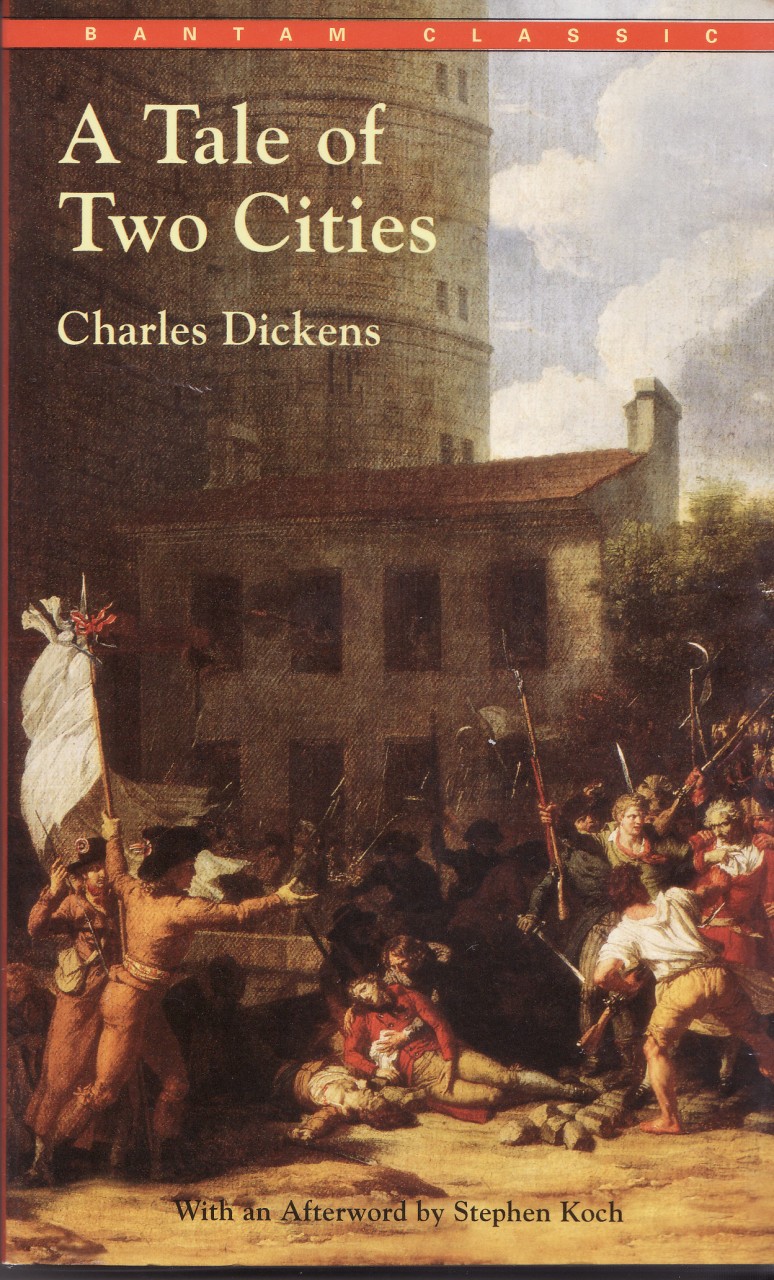
Out of the four Dickens novels mentioned in Rory’s class during the second episode, this was the novel I was most looking forward to reading for several reasons. One, I remember that I really enjoyed the episode of Wishbone that was based off of the novel. My love of literature started really early. Two, I had heard the famous opening line “It was the best of times, it was the worst of times” many different times (pun intended). I had to see the source material. And, three, this book came recommended by a good friend. I was told to prepare to have my heart broken so, of course, that just made me want to read it more.
            A Tale of Two Cities was different from the two previous Dickens novels I’ve read in that it had a clear plot trajectory rather than just a character study. David Copperfield and Great Expectations both focused on a coming of age story of a young boy and the different people that helped him grow up. However, A Tale of Two Cities is criticized because the characters were flat and lacked the depth seen in Dickens’ other works. I could see that as I read, especially with Lucie. Honestly, she was kind of boring and it seemed like the only reason so many men wanted to marry her was for her golden hair and her purity. Pffffffff. Golden hair doesn’t get you anywhere. Lemme tell you. But, Lucie is at the heart of the novel and a lot of the action is centered around her so I can’t bash her too much.
            The two male leads, Charles Darnay and Sydney Carton, are also criticized for their lack of depth. However, I must argue that they are written this way because it is their actions that speak the loudest. This novel is not meant to be like David Copperfield or Great Expectations. It is meant to capture a specific period in history and these two men epitomize the terror during this time. Of course, there is also a conspiracy theory that Darnay and Carton are Charles Dickens combined; that he put some of himself into both of these characters. I’m not so sure of that, but I do know that authors insert themselves into their characters whether consciously or not. The characters in this novel are not as dynamic as some of Dickens’ others, but they control the plot which is the heart of the story.
            Every good love story has a love triangle. That’s why Twilight, The Hunger Games, and Bridget Joneses’ Diary are such popular books and movies (I know that last one doesn’t really connect with the first two, but, trust me, it has the perfect love triangle). But, is it really a love triangle when one man does not make his intentions known? It seems that from very early on that Lucie and Charles Darnay were meant to be and the central couple of the text. However, Sydney Carton is slowly revealed to harbor a secret love for Lucie. He never takes the chance to tell Lucie how he feels because (1) he doesn’t feel like he is good enough, (2) he hasn’t found his own purpose in life, and (3) Lucie and Charles Darnay are already madly in love. But did Lucie ever have the chance to love Sydney? He never put himself out there or revealed his feelings to her. Maybe he thought he was doing her a favor because he didn’t think he was good enough. But he never gave himself the chance to see if she could return those feelings.
            It is pretty clear that I fall on the Sydney Carton team for the love triangle. I tend to side with the underdog in these situations. I really did like Charles Darnay and would easily claim him as my literature crush for this novel, but Sydney was just more interesting. Sydney had flaws that made him more real to me and unrequited love always makes me feel some sort of way. What really made love him was his action at the end of the novel. SPOILER ALERT. Sydney made the ultimate sacrifice him and gave up his life so Lucie could be happy with someone that wasn’t him. Ultimately, her happiness and safety was more important to him than his own life. And, with that, my heart was broken just like my friend said. Lucie would never know how much Sydney loved him, but his sacrifice saved many lives. I am just going to sob for a minute over this.

Other Thoughts:
- One of my favorite lines was about Sydney Carton: “When he cared to talk, he talked well.” Such a simple line, but with a lot said. I always listen carefully to those who are quiet because when they talk, it is usually very insightful. I wish I was one of those people. Sometimes I am. Other times, I just have a tendency to babble.
- I find it funny that Charles Darnay tells Lucie’s father that he loves her and intends to marry her before he even mentions to Lucie that he loves her. I would find it very strange if a guy told my dad that he was in love with me and intended to marry me before I even had any inkling myself.
- So far, my ranking of Dickens’ works are 1. A Tale of Two Cities, 2. Great Expectations, 3. David Copperfield

Next Time:

            Rory’s teacher mentioned Dickens and these novels because their topic of discussion is the impact English culture had on Russian culture and thenceforth English literature on Russian literature. This will lead into our next book, War and Peace (that one is going to be a long ride), because Charles Dickens was Leo Tolstoy’s favorite author. Wish me luck as I make my way through this 1215 beast of a Russian novel! And now because everyone deserves to look at a puppy...


Images
- Book cover: http://conversationsabouther.net/wp-content/uploads/2014/08/A_Tale_of_Two_Cities__91605_zoom.jpg
- Comic cover: https://upload.wikimedia.org/wikipedia/commons/thumb/f/f0/CC_No_06_A_Tale_of_Two_Cities.jpg/220px-CC_No_06_A_Tale_of_Two_Cities.jpg
-Wishbone: http://images.paperbackswap.com/l/59/3059/9780836823059.jpg

Sunday, May 14, 2017

Book #13: Harry Potter and the Goblet of Fire by J.K. Rowling

We are going to take a detour from the Dickens we have been reading during Rory’s first day at Chilton and read something a bit more recent. At the time of Gilmore Girls first season, Harry Potter and the Goblet of Fire was the most recent Harry Potter book released. I can remember this time because I was shocked that a children's book was this big. Miss Patty, Stars Hollow’s very own dance instructor, is the one to mention this book. She tells her dancers, “Now, walk smooth. That’s the new Harry Potter book on your heads. If they should drop, Harry will die, and there won’t be anymore books.” For some reason, this line has always stuck with me from the first time I watched the series. I’m not even a huge Harry Potter fan, but I found this incredibly hilarious. Just imagine trying to walk, let alone dance, with this huge book on your head. It is absurd.

Secret Time
            Now, I am going to tell you all a little secret…When I first read the Harry Potter series, I read the first three books, half of the fourth, and then the sixth and seventh. I know. I have Harry Potter fans of the word. I skipped the middle part of the series and leapt to the end. It is not that I dislike Harry Potter, I really did enjoy the series, I’m just not as obsessed with it as others are. There are books and series that I like more. I never went to a midnight showing or release party. I bought the books within the first few weeks and I saw the movies in theaters, but I couldn’t get into it the same way as everyone else. I got bored halfway through the fourth and just waited until the fourth and fifth movies to jump back in with book six. I didn't feel like I missed much (many people will argue with me here). However, you should be happy to know that I picked up my old copy of Harry Potter and the Goblet of Fire from ten plus years ago and picked up where I left off (To be honest, I have know idea if it was actually my bookmark left in that book, but oh well).
committed a mortal sin amongst the loyal

Nerdy Girls are Cool
            One thing I do love about the Harry Potter series is that it made being the nerdy, smart
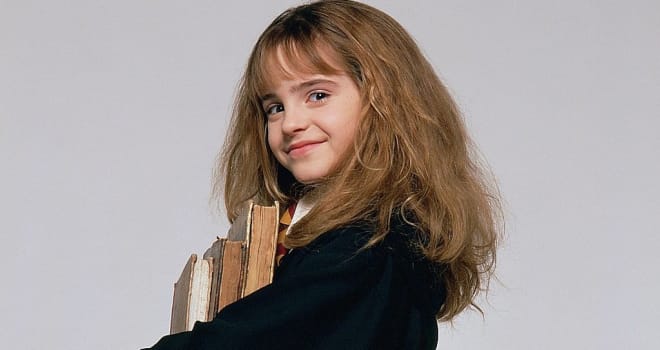
girl cool. Hermione may have had poufy hair and could be a bit of a know-it-all, but she was always confident, smart, and herself. This is exactly the kind of role model young girls need. I could always
relate to Hermione. From my early grade school years (when the books were first popular), the other kids would call me Hermione. I had the same kind of hair (I did not know how to tame the poufiness at that age) and I always had a book in my hand. I had a reputation of being smart and getting good grades. I was quiet and found solace in the library. I never found being compared to Hermione an insult. Hermione was a favorite Halloween costume of my peers. She was the character who always had a plan; who Harry and Ron trusted. I knew that I wasn’t exactly “cool” in the way many people associate with the word. I still would not classify myself as “cool.” But that is okay with me. I would rather be me, the nerdy, smart, self-assured, curly-haired woman I am. Maybe being “cool” is just being who you are and not being ashamed of it.

The Power of Friendship
            One of my favorite friendships in Harry Potter was the friendship between Harry and Hermione. Of course, I love Ron, but it will become clear why I did not include him in this. Harry and Hermione show a male-female friendship that is not clouded by romance. They can have a platonic relationship without ever questioning it. This is a topic that has been explored in rom-coms throughout the years. These rom-coms always seem to show that no male-female relationship is ever platonic. I’m not sure if this is true. Harry and Hermione are close confidents, but never wander towards the path of romance. I know J.K. Rowling has claimed that she now wishes she paired Hermione with Harry instead of Ron. I suppose I would be talking about Hermione and Ron here if that were the case. As someone who has many male friends, it is nice that the platonic side of male-female relationships is shown. Sometimes, friends are friends and nothing more.

Other Tid-bits
- In my 10th grade English class, we recently discussed Aristotle’s concept of the tragic hero. We discussed this idea in terms of Okonkwo in Things Fall Apart, but we also discussed Snape as a modern example of a tragic hero. A tragic hero has a fatal flaw called hamartia which leads to their downfall. In Snape’s case, his hamartia is his love for Harry’s mother. If you look at all the components of a tragic hero (just for funsies), you will see that Snape is a perfect example of a tragic hero.

- My personal favorite of the Harry Potter books (and movies) is Harry Potter and the Prisoner of Azkaban. This was the last book released before they became super big. The plot wasn’t convoluted and was pretty easy to follow. Also, it introduced one of my favorite characters, Sirius Black. It’s probably because I have a thing for hairy grumpy men ever since I saw Beauty and the Beast and Sirius Black fits that mold pretty well (the book version, not the movie version).


Nest time: A Tale of Two Cities by Charles Dickins!!

Images
Book Cover 1 https://milambc.files.wordpress.com/2015/10/goblet.jpg
Book Cover 2 https://upload.wikimedia.org/wikipedia/en/c/c7/Harry_Potter_and_the_Goblet_of_Fire.jpg
Hermione https://s.aolcdn.com/dims-shared/dims3/GLOB/crop/1024x543+0+16/resize/660x350!/format/jpg/quality/85/https://s.aolcdn.com/hss/storage/midas/f5fb4e246b8cf928569bc99032b70d3f/203163656/hermione-granger-played-emma-watson.jpg

Wednesday, April 12, 2017

Book #12: Great Expectations by Charles Dickens

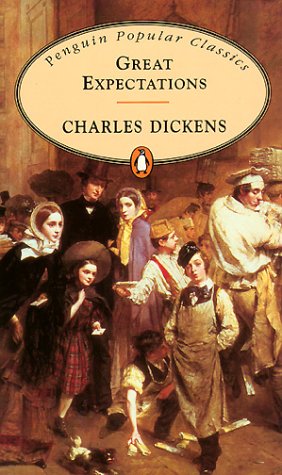
If you read my post about David Copperfield, you are well aware that my expectations for Charles Dickens were not very high after reading it. I thought David Copperfield was boring and had no cohesive plot. I was disappointed in Dickens and dreading the many Dickens novels that were to come on this list. I had a pleasant surprise, though, when I began reading Great Expectations. I could immediately tell that I would enjoy it better than David Copperfield. Don’t ask me how I knew so quickly, I just did. I have a sixth sense when it comes to these things.
On the surface, Great Expectations appears very similar to David Copperfield. Both stories are centered around a young orphan and follows his trials and tribulations as he reaches adulthood. However, Pip is a hell of a lot more likeable than David and the characters surrounding Pip are more vibrant than those in David’s world. Humor plays a major role in Great Expectations while David Copperfield focuses on the harshness of reality. I’m not saying that Great Expectations is all sunshine and rainbows; it is absolutely not. The cruelties in Great Expectations, such as Pip’s sister’s brutal attack and Estella’s backstory, are particularly harsh and gruesome. But rather than dwelling on the gruesome parts of life, Dickens gives us humor to distract us from the harrowing parts of the novel.

Tough Love
One of my favorite motifs (I know I am sounding extra English teachery by using this word) in this novel is the way the female characters express their feelings. Each of the prominent female characters (Mrs. Joe Gargary, Miss Havisham, Estella) are just plain mean to the men in their lives. We first see this with Pip’s sister Mrs. Joe Gargary. Her husband, Joe, is perhaps one of the sweetest men I have come across in literature. Maybe he isn’t the sharpest tool in the shed, but that is no excuse for his wife to be so short tempered to him. Mrs. Joe Gargary is also cruel to Pip, her own brother! I found her to be one of my favorite characters. Her character traits, especially her mood swings, were exaggerated to heighten the humor. My favorite part, though, was that no matter how mean she was, Joe still loved her with all his heart.
Miss Havisham is the epitome of a crazy old cat lady, but without all the cats. She sits in her room wearing her wedding dress from twenty years ago with all the clocks stuck at nine twenty because that is the exact moment her fiance left her. Miss Havisham isn’t exactly mean to Pip, but she shows no emotions except sadness and is never direct with him. She’s cold and lonely and feels spurned by all men simply because one hurt her.
This brings me to her adoptive daughter, Estella. Miss Havisham raised her as a weapon against men. She raised her so she could not love or have any feelings. Therefore, using her beauty as a tool to break men’s hearts. Pip, of course, falls for Estella the moment he lays eyes on her and pines for her for most of the novel. Estella goes out of her way to make hurtful comments and to play with Pip’s mind. She makes him cry, lets him kiss her, flirts with other men in front of him. I first thought, why on earth would he like this girl? Yeah, she is pretty, but she has no soul. Then, I thought back to something a guy once said to me “sometimes guys are attracted to girls who are mean to them.” Makes sense. I am always a tad bit mean to the guys I like the most and they always seem to like this. Maybe they like a girl that can stand her ground and be a bit of a challenge. This isn’t only true with guys. As a girl (I don’t know why I feel like I need to clarify this), I do tend to be attracted to guys who aren’t afraid to tease me. However, if someone pushes too far, I tend to pull away. I could not put up with a male version of Estella; someone who purposely makes you want to feel bad about yourself.

It all comes back to plot
The main reason Great Expectations is better than David Copperfield is not the humor, but rather the plot. Great Expectations has a clear plot trajectory and if something was brought up earlier in the novel, it was used in a later point to serve a purpose. David Copperfield was structured very much like a biography with “this happened, then this happened, then this.” I understand this, but it was boring to read. In Great Expectations, everything is tied up at the end, though not necessarily in a pretty little bow. I don't ask for a happy ending, just an ending that serves a purpose. This ending left us on a hopeful note with Pip and Estella reuniting as friends. Romance could be possible, but it is uncertain. Personally, I like this ending; it is more realistic. We don't always get what we want and sometimes, if not always, friendships should be celebrated more than romance. Okay, I will stop being sappy now <3


Pictures
Book 1 http://greatexpectationsnovel.weebly.com/uploads/2/3/0/1/2301863/936347_orig.jpg
Illustration http://www.charlesdickensinfo.com/wp-content/uploads/2012/07/Well_Pip_you_know_._._._._you_yourself_see_me_put_em_in_my_at-_ch._13-300x238.jpeg

Monday, March 20, 2017

Book #11: The Hunchback of Notre-Dame by Victor Hugo

When I was little, my two favorite Disney movies were Aladdin and Beauty and the Beast. They still are. I loved Aladdin because it was an adventure story and the tale of an underdog who got everything he wanted. I loved Beauty and the Beast because I am a sucker for a good love story Aladdin and Beauty and the Beast when you should be talking about The Hunchback of Notre Dame?” Slow down people. Let me get there…    
and saw myself in Belle. But I also loved the Beast; the misunderstood “monster” who hid his feelings under a mask of cruelty. You may be thinking, “Why are you talking about
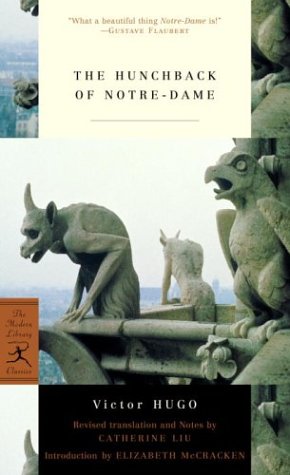
            Victor Hugo’s French novel The Hunchback of Notre Dame is dark and slightly (well, maybe not slightly) inappropriate. It is not the happy Disney movie. The novel is a study of several underdogs (i.e. Aladdin); specifically, the misunderstood “monster” (i.e. Beauty and the Beast). However, this character is not even the main character of the novel. Hugo wrote this book as a love letter to Notre-Dame, the building, and to the city of Paris. He spends numerous pages describing the architecture and layout of Paris and how it has changed throughout the centuries. This part was not the most interesting part of the novel to me. It’s interesting for someone who is interested in architecture, but that is not me. I prefer to focus on characters and how they develop throughout a story.
            If there was a common thread throughout the characters, it would be that they are all outsiders. Quasimodo for the obvious reasons. He is deformed and cannot express his emotions and this makes him frightening to others. Esmeralda, the beautiful gypsie, looks exotic and walks around with a pet goat (my dream by the way) and no family to recall. These two characters are at the core while other characters such as Claude Frollo and Pierre Gringoire also fit this description. They are all alone in the world, but they are all eventually joined together by this loneliness.
            There are a lot of aspects of the relationships in the novel that I could talk about, but I
want to focus on Esmeralda and Quasimodo. In the Disney movie, the relationship between these two characters is prominent. However, in the novel, the two don’t even meet until the last third of the book. At this point, Quasimodo is in all of her beauty and goodness. He wants to protect her to make up for scaring her and not being good like her. Therefore, he makes her his “master.” He gives her control over their friendship because he knows that he is not good enough for her. He sees her as “perfect” while he sees himself as innately flawed. Esmeralda never thought of Quasimodo this way. She never thought that he was not good enough to be her friend nor that was scary. These were thoughts that plagued him because that is how he saw himself. While the relationship between the two was never meant to turn romantic, it is still heartbreaking to see that one party never saw themselves as equal to the other or good enough for the other. Oftentimes, we focus on how we think others see us and this, in turn, impacts how we think of ourselves. Quasimodo knew that most people were scared of him and thought of him as a monster. Because of this, he thought of himself that way.

Please, please, please let me have a pet goat!

Other Thoughts
 - Lorelei references this novel when she and Rory pull up to Chilton for the first time. Lorelei gives the ancient building a strange look and says she is checking for a hunchback. Not a direct reference to the novel, but a reference nonetheless…so it goes on the list.
- Hugo pulls from Shakespeare with some of the major plot points of this novel including the multiple cases of mistaken identity and the death confusion (Romeo and Juliet anybody?) Of course, you could make the case that all texts pull from Shakespeare. Most texts do. He is the master at what he does and Hugo chooses some of his most entertaining techniques in his novel. You all will hear how much I love Shakespeare soon, trust me.
 - The ending was far from the Disney movie; definitely, a tragic ending. I won't spoil it for those who will read it. The final image, though, is very touching and would have been very scaring to put in a children's movie.
- The novel is much more inappropriate than I expected. Because I spend my days surrounded by 10th graders, I chuckled to myself every time Hugo called a character a "boobie." I have the sense of humor of a 15 year old...

Pictures
Book Cover 1 http://h-france.net/fffh/wp-content/uploads/2013/02/Hugo1.jpg  (cover of the version I read)
Book Cover 2 http://cdn3.volusion.com/jtoq7.b7owf/v/vspfiles/photos/HUNCHBACK_OF_NOTRE_DAME-2.jpg (Quasimodo looks kind of attractive in this cover)
Goat https://s-media-cache-ak0.pinimg.com/564x/3b/cc/9e/3bcc9e9cb6b22bb4f886cf41ea9e853a.jpg

Tuesday, March 7, 2017

Book #10: David Copperfield by Charles Dickens

               It’s pretty astonishing that after four years as an English major and years of reading for pleasure that the only Charles Dickens novel I have read is A Christmas Carol. Somehow, Dickens never made it onto the required reading lists and was always something that I told myself I would “get to later.” Lucky for me, this reading challenge has a lot of Dickens. Now that we are on to episode two and Rory’s first day at Chilton, we are also introduced to an abundance of high quality literature. In a short exchange between one of Rory’s teachers and Paris, several Dickens novels are mentioned and David Copperfield is the first.
            David Copperfield is Dickens’ semi-autobiographical novel about a young boy growing up through poverty and adversity. It was Dickens’ favorite of his novels and many critics consider it the greatest of his novels. As I have not read all of his novels, I cannot say I agree with this. I have to read more to decide this. However, I would not sing the praises of this novel as others have. Personally, I found it long and tedious. I can appreciate this novel from a literary standpoint, but it followed the structure of a biography and therefore the plot was lacking. David was presented with challenge after challenge, villain after villain, but other than the character itself, there was not a common thread. Now, I know in life there is not always a common thread and, well, things just happen as they happen. BUT, when I read a book, I want there to be some semblance of a plot and storyline. The character needs to be going somewhere. Maybe it is because I could not really connect to David Copperfield the character that I felt this way.
            While I admire David’s tenacity and his ability to overcome any challenge he faces, I did not always like him. I found him a little self-centered, especially in how he viewed the women in his life. David is quite the flirt and has several love interests throughout the novel (Emily, Agnes, Dora). I suppose in the span of one’s lifetime that is acceptable because God knows I have flirted with more than three guys in my twenty-four years. But he spends his time bouncing between the three and he views all in a similar manner. David had a childhood crush on Emily and he was more intrigued by her childlike innocence than anything else. At one point, Dickens wrote that it be “better she die innocent and young” in reference to Emily. This bothered me because 1. It came out of the blue so it is a bit creepy, and 2. Why is a woman less appealing when she is aware of the world? This is a common theme with David. Along with Emily, he views his first wife Dora as a child. Dora is a grown woman, but David treats her as if she is breakable and often refers to her as his “child wife.” More so, he encourages Dora to view herself in this way. Agnes, David’s second wife, is a little different. While she does not act like a child in the way Dora does, Agnes is presented as an “angel” and “perfect.” She is good and selfless and…well…boring. Agnes has very minimal character development and it’s frustrating that she is presented as the ideal wife. I also find it irksome that a good woman is presented as boring. You can be good and interesting and exciting at the same time.

            I suppose some of the issues I have with this novel are because it was written in 1850, but that is no excuse for how boring I found it! I’m sorry; I’m getting sassy here. I will give Dickens another chance. Maybe I read this book during the wrong time of year. Reading a long, tedious novel with many depressing story elements is not always the most fun in the middle of winter. Oh well! On to the next one!