Tuesday, March 7, 2017

Book #10: David Copperfield by Charles Dickens

               It’s pretty astonishing that after four years as an English major and years of reading for pleasure that the only Charles Dickens novel I have read is A Christmas Carol. Somehow, Dickens never made it onto the required reading lists and was always something that I told myself I would “get to later.” Lucky for me, this reading challenge has a lot of Dickens. Now that we are on to episode two and Rory’s first day at Chilton, we are also introduced to an abundance of high quality literature. In a short exchange between one of Rory’s teachers and Paris, several Dickens novels are mentioned and David Copperfield is the first.
            David Copperfield is Dickens’ semi-autobiographical novel about a young boy growing up through poverty and adversity. It was Dickens’ favorite of his novels and many critics consider it the greatest of his novels. As I have not read all of his novels, I cannot say I agree with this. I have to read more to decide this. However, I would not sing the praises of this novel as others have. Personally, I found it long and tedious. I can appreciate this novel from a literary standpoint, but it followed the structure of a biography and therefore the plot was lacking. David was presented with challenge after challenge, villain after villain, but other than the character itself, there was not a common thread. Now, I know in life there is not always a common thread and, well, things just happen as they happen. BUT, when I read a book, I want there to be some semblance of a plot and storyline. The character needs to be going somewhere. Maybe it is because I could not really connect to David Copperfield the character that I felt this way.
            While I admire David’s tenacity and his ability to overcome any challenge he faces, I did not always like him. I found him a little self-centered, especially in how he viewed the women in his life. David is quite the flirt and has several love interests throughout the novel (Emily, Agnes, Dora). I suppose in the span of one’s lifetime that is acceptable because God knows I have flirted with more than three guys in my twenty-four years. But he spends his time bouncing between the three and he views all in a similar manner. David had a childhood crush on Emily and he was more intrigued by her childlike innocence than anything else. At one point, Dickens wrote that it be “better she die innocent and young” in reference to Emily. This bothered me because 1. It came out of the blue so it is a bit creepy, and 2. Why is a woman less appealing when she is aware of the world? This is a common theme with David. Along with Emily, he views his first wife Dora as a child. Dora is a grown woman, but David treats her as if she is breakable and often refers to her as his “child wife.” More so, he encourages Dora to view herself in this way. Agnes, David’s second wife, is a little different. While she does not act like a child in the way Dora does, Agnes is presented as an “angel” and “perfect.” She is good and selfless and…well…boring. Agnes has very minimal character development and it’s frustrating that she is presented as the ideal wife. I also find it irksome that a good woman is presented as boring. You can be good and interesting and exciting at the same time.

            I suppose some of the issues I have with this novel are because it was written in 1850, but that is no excuse for how boring I found it! I’m sorry; I’m getting sassy here. I will give Dickens another chance. Maybe I read this book during the wrong time of year. Reading a long, tedious novel with many depressing story elements is not always the most fun in the middle of winter. Oh well! On to the next one!

Wednesday, February 8, 2017

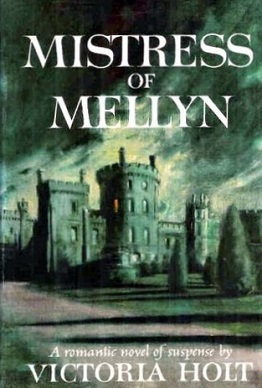
Book #9: Mistress of Mellyn by Victoria Holt

          Rory must have been going through a Gothic romance and feminine literature phase while she was at Stars Hollow High. We can see this from the books she is carrying from her locker: The Second Sex, Madame Bovary, Rebecca, and…Mistress of Mellyn. I was familiar with all the previous titles Rory had read, as they are well-known classics; however, I had never heard of . It took quite a bit of hunting to find myself a copy of this novel. I checked multiple book stores, searched through several library systems, and even checked online resources. Eventually, I found a used copy on Amazon for a dollar so I snatched it up. I was instantly curious why Rory would have this novel on her shelf. It was not a well known book nor was it by an author that was popular in our day and age.
Mistress of Mellyn
            Upon reading Mistress of Mellyn, I noticed it was eerily similar to Rebecca (see previous post) both in plot and tone. Of course, it was not exactly the same; but it was enough for people to speculate it was actually written by Daphne Du Maurier. Personally, I do not think it was as well written as any of Daphne Du Maurier’s works. It was obvious that Holt was a fan and built off of du Maurier’s success in the romantic genre to come up with her own story.
            Mistress of Mellyn takes pace in an upper class manner called Mellyn (obviously) which is coincidentally similar to the Manderly, the manner house in Rebecca. Both of these houses are “haunted” by the previous lady of the house who mysteriously died, Alice in Mistress of Mellyn and Rebecca. The action in both novels takes place roughly a year after each woman died. However, the main character in Rebecca arrives to the house as the new lady of the house while the main character in Mistress of Mellyn arrives as the governess. Both narrators attempt to solve the mystery of the lady of the house’s death and finds their place in life along the way. Rebecca ultimately does this better and leaves a more thought provoking ending. Mistress of Mellyn resolves every plot point with a neat and tidy bow. This is nice to see, but not always satisfying.
            Even though Mistress of Mellyn seems like a lesser Rebecca, I did enjoy reading it. I was excited to see that the main character’s name was Martha Leigh and went by Leigh for the majority of the novel. It is very rare that my name is used for a character in a novel, let alone for the protagonist. Martha was also a name that is meaningful to me. My maternal grandmother’s name was Martha so the combination of Martha Leigh immediately made me inclined to like the main character. I could also connect to Martha Leigh because she was a governess and I am a teacher. I could relate to how dedicated she was to her pupils and her craft, but I could also connect to her personality. Whenever someone of a higher level interacted with Martha Leigh, she would respond with “I’m just a governess.” Whenever she was complimented, she took the humble approach and it seemed like she could not see her worth. I am very similar in this nature. I have always been the type to shy away from praise and let others share the limelight. When someone gives me a compliment, it is easier to brush it off with a joke than to just say thank you. It is often difficult for me to see my own worth and this is something the main character struggled with. Everyone else could see it, except for her. Sometimes it takes someone else to see a different side of ourselves. We don’t always see ourselves the way others see us. We are often hard on ourselves and hold ourselves to higher standards than we do others. I am guilty of that crime. If anything, what I took away from this novel is that I am never “just” a teacher; never “just” a student; never “just” Leigh. I am all these things and I am more than enough and you are too. 

Pictures
Book cover: https://images-na.ssl-images-amazon.com/images/I/51qWT1I6RiL._SY344_BO1,204,203,200_.jpg
Old Book cover:https://upload.wikimedia.org/wikipedia/en/5/58/Mistress-of-mellyn-victoria-holt.jpg

Saturday, January 14, 2017

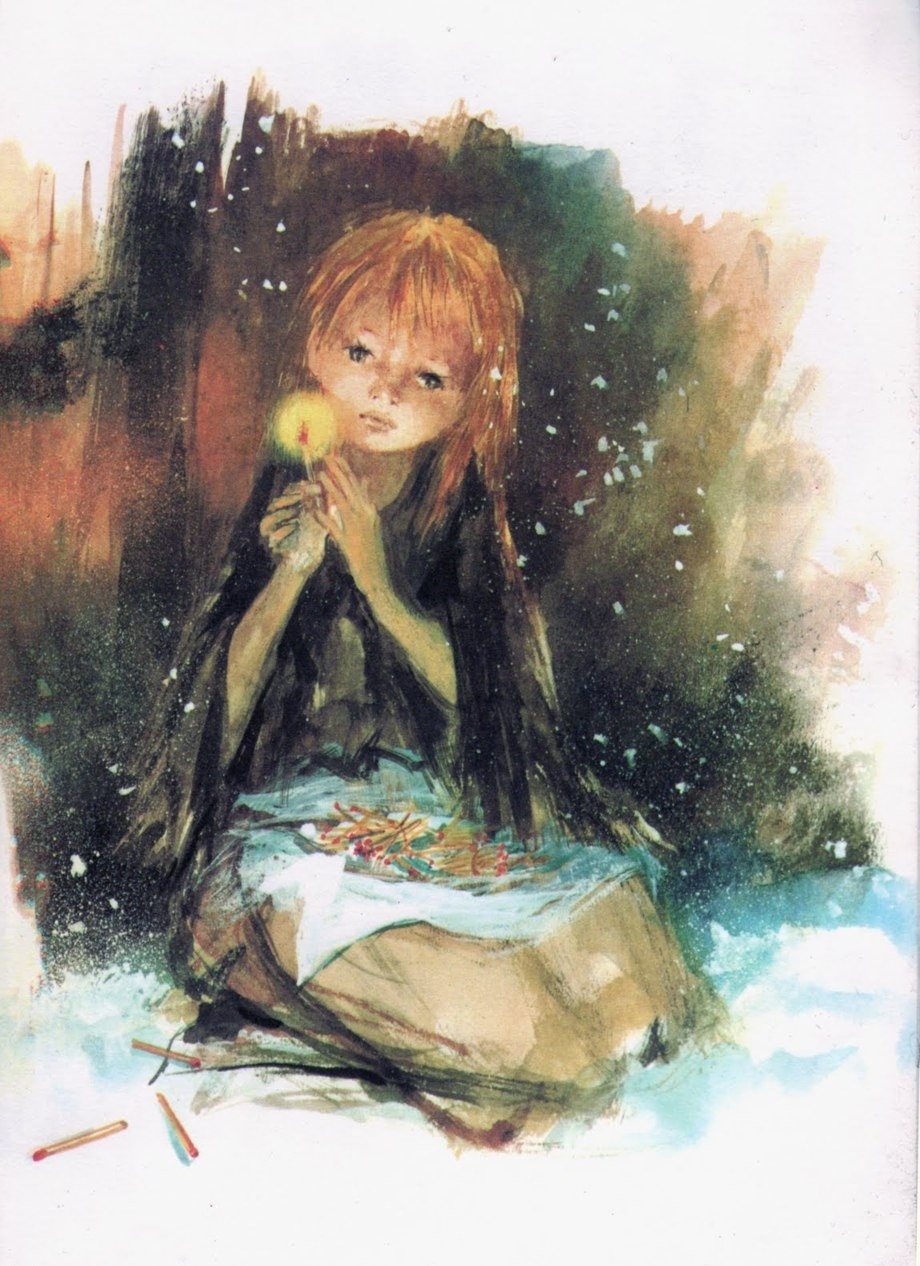
Book #8: The Little Match Girl by Hans Christian Anderson

Can you say most depressing children’s story every? In all honesty, it is going to take a lot of effort to say something positive about this story. Not only was the ending of the story heartbreaking, but the entire concept of the story would give any child nightmares if someone read this to them before bed. It was not the story I needed to read during this dreary time of yea, especially in light of some recent experiences. I suppose I should have been prepared for the dismal tone since Rory did name-drop the story in a negative context.
            To set the scene: Lorelai and Rory are outside of Richard and Emily’s house for the first ever Friday Night Dinner. The two are hesitant to enter, especially Lorelai, and Rory breaks the tension by saying, “The Little Match Girl?” It does not help that the two of them are in the midst of a fight (over Dean) as well. Therefore, any book that Rory brings up within these specific circumstances would probably be a depressing one.
o we go in or do we just stand here reenacting
            As I read Hans Christian Anderson’s classic fairy tale, I was unnerved by how he referred to the main character. For the record, she was referred to as the “poor little girl” (twice), “poor little thing” (twice), and “little maiden” (four times). For a barely three page story, this is a lot of space towards negatively describing a little girl. Just give her a name! Don’t just talk down to her, give her a personality too! I guess that is a lot to ask for a three page story. Maybe I just need to write a reimagining of this story, but then it would change into something different.
            What kind of fairy tale ends with the main character, an innocent little girl, freezing to death? I know you could twist this ending to seem happy: that the poor little girl is now celebrating a happy Christmas with her loving grandmother in heaven. But it is still extremely depressing! I am sure my feeling have come across very clear here. I know many fairy tales originate in twisted dark stories, but thank goodness Disney did not decide to make a movie about this one!


Only one book left for the pilot episode! At this rate, it might take me a few years to get through all the books, but it should be a fun journey!

Pictures
Book cover -http://images.gr-assets.com/books/1411481144l/342994.jpg
Illustration - https://apenandacamera.files.wordpress.com/2012/12/20121225-134326.jpg

Friday, December 30, 2016

Book #7: Rebecca by Daphne du Maurier

Du Maurier’s classic tale of romantic suspense was one of the books on this list that I was most excited to read. It has been sitting on my bookshelf, eagerly waiting for me to read it for years. Why didn’t I read it you may ask? Well...I am one of those weird people who once they buy a book, they can’t read it right away because they want to build anticipation and look at it on their bookshelf for awhile first. I want the book to marinate, if you will, before I read it. There. You all probably think I am crazy. Oh well.

Rebecca, the original Gone Girl
If there is one book that stands out in female centered literature within the last ten years, it is Gillian Flynn’s novel Gone Girl. If you have not heard of the book (or the movie adaptation), you must be Gone Girl follows the contentious marriage of Amy and Nick while centered around Amy’s mysterious disappearance (as if there are any other kinds of disappearances). When the novel came out, the ending (SPOILERS) was considered shocking and Amy became a new kind of villain. The genre of domestic thriller was born. However, while reading Rebecca, I realized that Amy was not the first of her kind. The character of Rebecca, or rather the “ghost” of Rebecca, originated the controlling, manipulative lover who excelled at deceiving all of those around her except for her "lover." One of the most admirable characteristics of both Rebecca and Amy was their confidence. Both women were always several steps ahead of their pawns and masterfully knew how to manipulate a situation to fit their ultimate goal. Both fit the mold of a villain and the mark of a good villain (and good writing) is that the villain can, at times, be sympathetic.      
living under a rock.

Best to remain unnamed
One of the reasons du Maurier’s work is so memorable is that her narrator is made to not be. While Rebecca is the titular character of the novel and the propelling force of the story, she is neither the narrator nor a physical entity within the story. All we learn about Rebecca comes from other’s
interpretations of her and second hand knowledge. The narrator, though, tells the story as Rebecca’s successor as the second Mrs. de Winter. This is all we know her as; she is never given a first name. Although du Maurier claims that she couldn’t think of a name for her narrator and so it became a challenge for her to write in that style, I think there may be a greater purpose in leaving her nameless. The narrator spends the majority of the novel attempting to live up to what she believes others expect of her and to the glory of the first Mrs. de Winter, Rebecca. We learn along with the narrator that Rebecca was quite charming, witty, beautiful, and kind (supposedly). Literally every character that interacted with her seemed to love her (emphasis on seem). At least, that is how it appears in the narrator’s head. The narrator feels the pressure of Rebecca’s ghost upon her. She feels that she can never live up to her or be the kind of wife she was. The narrator creates scenarios in her head of what Rebecca and Maxim’s (Mr. de Winter) life must have been like together therefore making her feel like her marriage with Maxim is less. Is this the truth? No. We learn in the end how Rebecca really was and the narrator realizes that the Rebecca she created in her head never existed at all.
            Jealousy is a cruel, cruel feeling. We many not be in the narrator’s situation, but we all know what it feels like to be jealous. One cannot help but be jealous of our partner’s past loves or our ex’s current ones. Those who came before will always be a touchy subject. What about them did they love? Does a part of them still love them? Am I anything like them? Would they go back to them if they had a chance? We idealize our lovers past loves because it hurts to think that somebody else once made them happy. We worry that we might not make them happy in the same way. This feeling does more harm than good and makes us jealous of someone we created in our imaginations. It is rare that it is the past lover that causes tension in a relationship, but actually the imagined scenarios with the past lover that creates tension. More so, when someone we love or once loved moves on and finds someone to fill your place, you can’t help but imagine how perfect this new person must be. They must have all the good parts you have, but also must be even better in certain aspects. They must be gorgeous, you think. Perfectly funny and smart; able to flirt effortlessly and not be the least bit awkward. It makes you doubt yourself and question what you once had with that person. In this way, you can sympathize with the narrator throughout the novel. You are causing the damage to yourself, not the actual person. She states it perfectly when she speculates “I wondered how many people there were in the world who suffered, and continued to suffer, because they could not break out of their own shyness and reserve, and in their blindness and folly built up a great distorted wall in front of them that hid the truth” (280). I was definitely one of those people and, at times, I still am. I’ve always considered myself shy and reserved, and many people in my life would second that opinion. I have always been too “in my head,” overthought things to the extreme, especially in the romantic entanglements in my life. I do not always consider this a weakness or flaw. My overthinking ways make me observant, it makes me attuned to people’s needs, it makes me creative. I may be on the more reserved side, but I have turned that into something that I am proud of.

Other Thoughts:
- The second Mrs. de Winter is around 23 and Maxim de winter is around 42. Their age difference is a point of contention in their relationship. He treats her and talks to her as if she were a child propelling her to act more and more like a child. I suppose this is something they both need at the time: for him, a complacent wife who is one hundred percent faithful, unlike his last one. For her, someone to take care of her; something she was missing in her childhood. Either way, I personally think that is too big of an age gap and will stick with my two years younger, five years older age range.
- We all consider Rebecca to be the villain of the novel, but could we actually see her as a misunderstood woman who was born in the wrong time period? If she were born about 70 years later, Rebecca could be free to be sexually promiscuous without judgment. She wouldn’t have to marry to receive status and she would have had access to better medical care for her condition. Or she would have turned out more manipulative and dangerous like Amy in Gone Girl.
- Since we are talking about a famous Daphne in this post, I just want to give a shout out to a famous Daphne in my life: my childhood Labrador. For fifteen years, my Daphne brought me joy and love. R.I.P. my pretty princess <3


Pictures
- book cover: http://www.booksatruestory.com/wp-content/uploads/2013/08/Rebecca-Daphne-Du-Maurier.jpg 
- film poster: https://upload.wikimedia.org/wikipedia/en/1/16/Rebecca_1940_film_poster.jpg 
- Quote: https://s-media-cache-ak0.pinimg.com/236x/b9/00/ec/b900ecd0ded37dd441873e87c1294597.jpg

Tuesday, December 13, 2016

Book #6.5: A Stephen King Novel

Book #6.5: A Stephen King Novel

            Stephen King is perhaps one of the most prolific novelists of modern time. While some may criticize his efforts (any literature buff has heard about his feud with James Patterson), one cannot deny that he has a talent telling stories that appeal to and thrill the masses. It is no wonder that Lorelai and Rory reference Stephen King numerous times throughout the series. The very first reference comes in the pilot episode when Lorelei says “There are several scenes from a Stephen King novel I’d reenact before I’d resort to that option!"
in reference to borrowing money from her parents. Now, because Lorelai did not mention a specific novel, I decided to choose one from my personal library that I had not read before: Joyland.
            I would not say I am well versed in the world of Stephen King. I have read the classics that are The Shining and Carrie as well as his memoir On Writing. So I viewed this time as to read a book that I had lying around, but one I was also interested in. I won’t go into a lot of
detail about this specific book because this was just a brief reference so this will tide us over until my next post.

My thoughts
 - King is known for horror, but he doesn’t use cheap thrills to tell his stories or make them scary. His stories are subtly scary because they are allegories for real life. Joyland, for example, is not just about a serial killer or a haunted amusement park ride. It is a story about growing up and facing the hardships life deals you.
- King’s memoir On Writing is actually one of my favorite books. As someone who dreams about writing a novel one day, it was valuable to read how one of
the world’s most successful writers struggled at first. Success does not necessarily come easy. It takes work and rejection often comes first. I also like to read how he approaches writing and where his inspiration comes from.


Many of Stephen King’s novels are on this Book Challenge. I am excited to read them and really delve into King’s motivation behind these stories.

Pictures
Author Picture: http://www.heyuguys.com/images/2014/08/Stephen-King.jpg
Joyland Cover: https://upload.wikimedia.org/wikipedia/en/b/b1/Joyland.jpg
On Writing Coverhttps://upload.wikimedia.org/wikipedia/en/thumb/6/62/Onwriting.jpg/220px-Onwriting.jpg