There are many authors referenced throughout Gilmore Girls that are not on the
official list. Lorelai and Rory rattle off book and movie titles without skipping a beat. References can fly by even the most attentive viewer. I have a friend who would pause the show and look up a reference when he didn't know it. Personally, I only cared about the literature references. Being the book nerd I am, I have started to add these author
onto my reading pile. It’s not as if I need to add more to the 339 book
list, but, hey, I am a perfectionist.
George Sand
 George Sand was referenced in episode two during the
exchange between Paris and the teacher when War
and Peace, Anna Karenina, and all the Dickens passages were mentioned. The teacher says
that “Dostoevski’s main authorial influences…” and Paris responds with “George
Sand and Balzac.” Books by Dostoevski and Balzac appear later on the list, but
George Sand does not. George Sand is one of those names I have come across in my literature studies, but never made the effort to look up. It turns out that George Sand is
a French FEMALE novelist from the 1800s. She was born Amantine Lucile Aurore Dupin, but chose George
Sand as her pseudonym. Obviously, more people would read her work if they
thought it was written by a man in that time period.
George Sand was referenced in episode two during the
exchange between Paris and the teacher when War
and Peace, Anna Karenina, and all the Dickens passages were mentioned. The teacher says
that “Dostoevski’s main authorial influences…” and Paris responds with “George
Sand and Balzac.” Books by Dostoevski and Balzac appear later on the list, but
George Sand does not. George Sand is one of those names I have come across in my literature studies, but never made the effort to look up. It turns out that George Sand is
a French FEMALE novelist from the 1800s. She was born Amantine Lucile Aurore Dupin, but chose George
Sand as her pseudonym. Obviously, more people would read her work if they
thought it was written by a man in that time period.
I found one of her short stories,
“The Devil’s Pool” online. It is a pastoral novella which has a heavy focus on
nature and human relationships. It follows a young widower as he travels to
meet a potential new wife. However, he ends up falling for the young woman who
is traveling with him to watch over his children. Sweet, right? No. He is 28
and she is 15…and she doesn’t really want to marry him. But he persuades her
that she should and she says yes. How romantic? Am I right?
It isn’t a very complex story and
much of the narrative is focused on the day to day life of the French country
side. If you recall, Dickens and Tolstoy spent much of their novels focusing on
the day to day life of different social groups in their novels. While I see the
importance of recording the everyday life of the people, it can get a bit
boring to read.
Mark Twain
Mark Twain
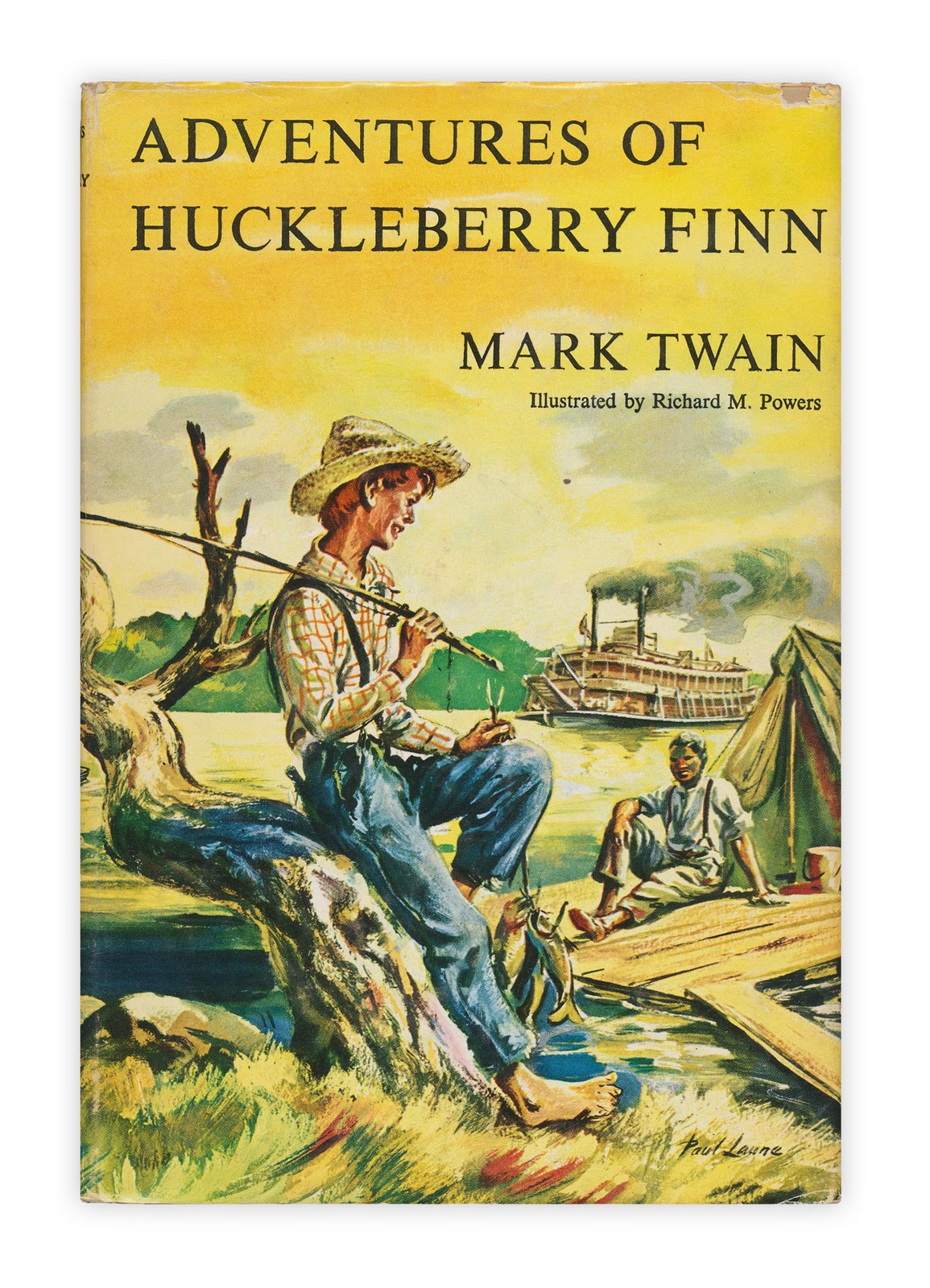
is one of my favorite nineteenth century American authors. If you remember, The Adventures of Huckleberry Finn is
one of my favorite classic novels. Twain is probably best known for his humor
and that is how Rory mentions him while golfing with her grandfather. Twain is
noted for saying “Golf is a good walk spoiled.” I couldn’t have said it better
myself! Golf is boring and the only entertaining way to play it is through
Putt-Putt at the beach.
Since no
specific title by Twain was referenced here, I chose to read The Prince and the
.jpg)
This tale
is so enticing because every person always wonders what their life could be
like if they had taken different opportunities or were placed in different
circumstances. More so, the idea of the double, or doppelganger, is a motif
that stretches across time. There is an innate fear of our “evil twin” or our
dark side. Even though Twain does not make the prince nor the pauper evil, that
fear of the double is still present. What if someone can’t tell you apart? Can
your identity be taken? These fears are at the root of many stories on
television today (The Vampire Diaries,
Buffy the Vampire Slayer, Alias, Charmed, Supernatural).
I enjoyed
reading The Prince and the Pauper,
but not as much as The Adventures of
Huckleberry Finn. Even though I liked the idea of the story, the writing
did not draw me in as much as some of Twain’s other stories. Maybe it was the
point in time that I read it, but I could not seem to really get invested in
the book or the characters. That doesn’t mean that the book is not worth
reading. It just means that I couldn’t connect to the story at the point in my
life that I read it.
Schindler’s List by
Thomas Keneally
Schindler’s List, the movie, was
referenced in episode two when Rory mentioned that she had been part of the
German club at Stars Hollow High. If my high school had a German club, I
probably would have joined it purely because I have family there (not because I
can speak German).
 It is
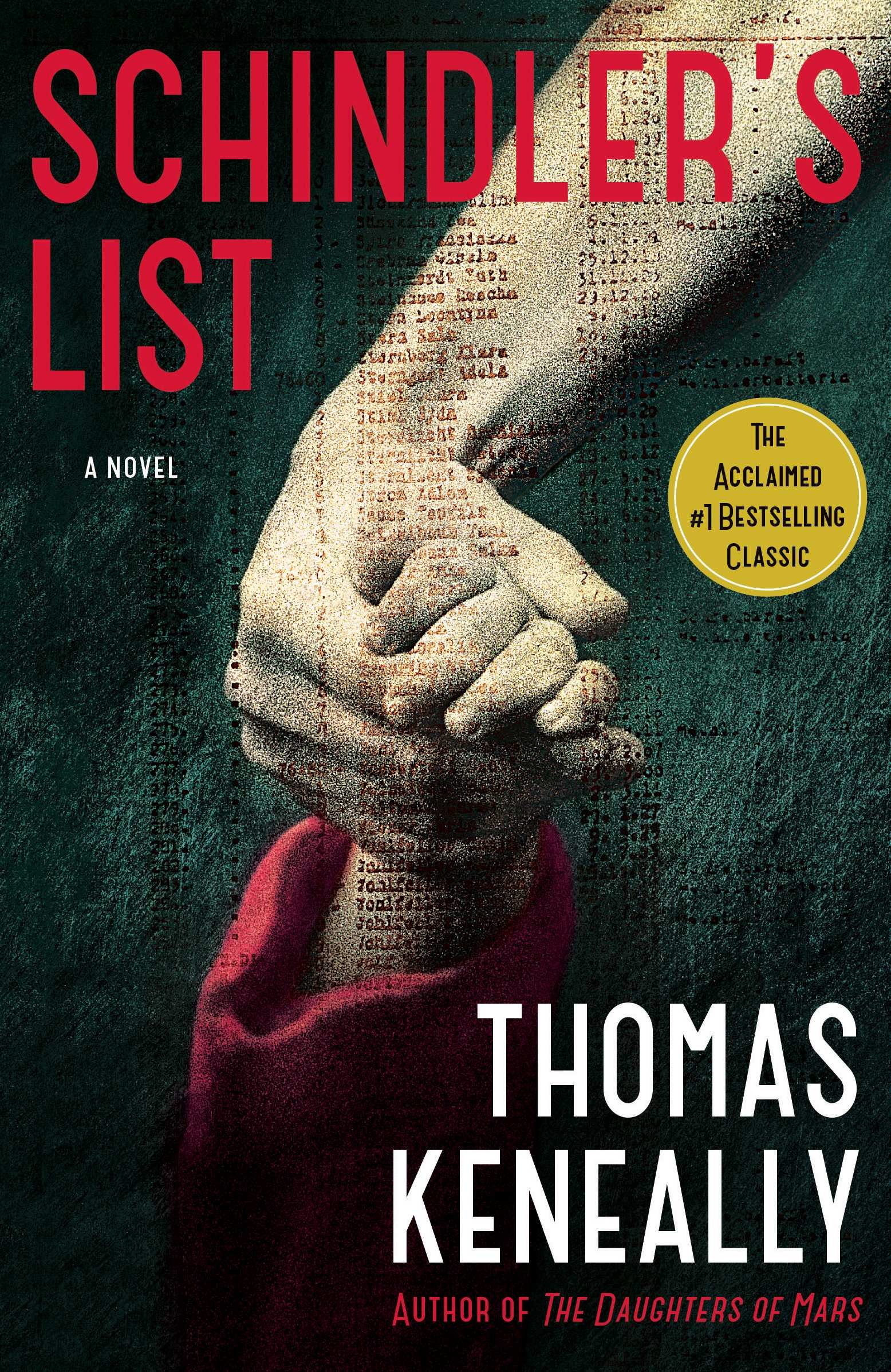
common knowledge among book lovers that you must, you absolutely must, claim Schindler’s List by Thomas Keneally is one of those instances.
Maybe it is because I have a thing for Liam Neeson…
It is
common knowledge among book lovers that you must, you absolutely must, claim Schindler’s List by Thomas Keneally is one of those instances.
Maybe it is because I have a thing for Liam Neeson…
All joking
aside, the story of Schindler’s List is
very intense and emotional both in book and movie form. However, seeing it
on screen helps you visualize the horrors of the Holocaust. The black and
white visuals make the story even more intense than it already is and made the
story more engaging. Keneally’s writing style was not very engaging. The plot
was there, but the narrative in which it was told was not. It is definitely an
example of how a writer’s voice and style are essential to a story. A story can
be exciting and moving, but if it isn’t told in the correct manner, it is not
going to be as impactful to an audience. In the case of Schindler’s List, the movie tells the story better than the novel.
Plato
Since Plato
was name dropped in episode three, I decided to read Plato’s short piece
“Crito” found in my trusty old AP Language 40
Essays Anthology. “Crito” is a dialogue between Socrates and his old friend
Crito in which Crito tries to persuade Socrates to escape from prison. Socrates
explains to Crito in this dialogue that he has accepted the results of his
trial, which is
 death. The entire exchange is propelled by questions, aka the
Socratic method. Plato, who was a student of Socrates, wanted to showcase this
method of reasoning. The Socratic method focuses on teaching through
questioning. As a teacher myself, I see myself using this daily. Rather than
just giving students facts or telling students what to think, I use higher
order questions (There are three levels of questioning. I won’t bore you with
them). We want to give students the tools for self-discovery and come to
conclusions for themselves. Teachers are supposed to guide the discovery
process and questioning is one of the ways to do so. Although I don’t agree
with Socrates in this passage (I say, he should have saved himself), I
understand his teaching process and what Plato was supposed to show in this
passage.
death. The entire exchange is propelled by questions, aka the
Socratic method. Plato, who was a student of Socrates, wanted to showcase this
method of reasoning. The Socratic method focuses on teaching through
questioning. As a teacher myself, I see myself using this daily. Rather than
just giving students facts or telling students what to think, I use higher
order questions (There are three levels of questioning. I won’t bore you with
them). We want to give students the tools for self-discovery and come to
conclusions for themselves. Teachers are supposed to guide the discovery
process and questioning is one of the ways to do so. Although I don’t agree
with Socrates in this passage (I say, he should have saved himself), I
understand his teaching process and what Plato was supposed to show in this
passage.
My sister
has been taking a philosophy course this semester in college. She tells me
about some of the passages she has had to read and I proofread her papers.
Anything she has to say on the topic of Plato is probably ten times more
interesting than what I just said.
Pictures
George Sand: https://upload.wikimedia.org/wikipedia/commons/thumb/5/54/George_Sand_by_Nadar%2C_1864.jpg/1200px-George_Sand_by_Nadar%2C_1864.jpg
The Prince and the Pauper:
https://upload.wikimedia.org/wikipedia/en/b/bb/Disney%27s_The_Prince_and_the_Pauper_%281990%29.jpg
Schindler's List
https://images-na.ssl-images-amazon.com/images/I/914HFOPuVwL.jpg
Plato:
https://upload.wikimedia.org/wikipedia/commons/thumb/d/da/Plato_Pio-Clemetino_Inv305.jpg/220px-Plato_Pio-Clemetino_Inv305.jpg