Tuesday, December 13, 2016

Book #6.5: A Stephen King Novel

Book #6.5: A Stephen King Novel

            Stephen King is perhaps one of the most prolific novelists of modern time. While some may criticize his efforts (any literature buff has heard about his feud with James Patterson), one cannot deny that he has a talent telling stories that appeal to and thrill the masses. It is no wonder that Lorelai and Rory reference Stephen King numerous times throughout the series. The very first reference comes in the pilot episode when Lorelei says “There are several scenes from a Stephen King novel I’d reenact before I’d resort to that option!"
in reference to borrowing money from her parents. Now, because Lorelai did not mention a specific novel, I decided to choose one from my personal library that I had not read before: Joyland.
            I would not say I am well versed in the world of Stephen King. I have read the classics that are The Shining and Carrie as well as his memoir On Writing. So I viewed this time as to read a book that I had lying around, but one I was also interested in. I won’t go into a lot of
detail about this specific book because this was just a brief reference so this will tide us over until my next post.

My thoughts
 - King is known for horror, but he doesn’t use cheap thrills to tell his stories or make them scary. His stories are subtly scary because they are allegories for real life. Joyland, for example, is not just about a serial killer or a haunted amusement park ride. It is a story about growing up and facing the hardships life deals you.
- King’s memoir On Writing is actually one of my favorite books. As someone who dreams about writing a novel one day, it was valuable to read how one of
the world’s most successful writers struggled at first. Success does not necessarily come easy. It takes work and rejection often comes first. I also like to read how he approaches writing and where his inspiration comes from.


Many of Stephen King’s novels are on this Book Challenge. I am excited to read them and really delve into King’s motivation behind these stories.

Pictures
Author Picture: http://www.heyuguys.com/images/2014/08/Stephen-King.jpg
Joyland Cover: https://upload.wikimedia.org/wikipedia/en/b/b1/Joyland.jpg
On Writing Coverhttps://upload.wikimedia.org/wikipedia/en/thumb/6/62/Onwriting.jpg/220px-Onwriting.jpg

Monday, November 28, 2016

Book #6: Madame Bovary by Gustave Flaubert

You have to admire a guy who pays attention to the books his girl is reading… or slightly creepy when he does not exactly know the girl yet. When Dean asks Rory about Moby Dick (in the very same scene in the pilot episode), he asks her how she enjoyed Madame Bovary…which she had finished before she met him. Madame Bovary is a French novel about a bored housewife and her irrational and endless search for happiness. This is a dense novel for a high schooler to read (much like Moby Dick), but is fitting for Rory. Emma Bovary finds her solace and her expectations in books, much like Rory. While Rory uses fiction as a way to expand her reality, Emma Bovary uses fiction to set unrealistic expectations for her own reality.

Fiction vs. Reality
There are not many parts of the character of Emma Bovary I like or can even relate to. The only similarity between myself and Emma (and Rory) is our love of reading. Ever since I was a child, I
loved books more than any toy my parents could buy me. It is probably evident from this blog that books are a huge part of my lifestyle. I love a story of any kind and am open to reading almost anything. I find it an escape from my regular life, a way to express my emotions (catharsis!), and teaches me life lessons and facts about subjects I never knew otherwise. But what separates myself from Emma in our love of books, is that Emma does not know how to distinguish between fiction and her reality. She reads epic romance novels and adventure stories and expects to find those same extremes in her own life. She does not realize that literature often dramatizes the extremities of life in order to bring out an emotional response from their readers. When Emma realizes reality can never live up to the adventures in her books, it causes her to become depressed and her husband to ban her from reading. Emma expects to experience love like she sees it in books and, therefore, self-sabotages her chances of happiness in her own life. This brings me to my next point…


The Pursuit of Happiness
Emma spends the majority of the book never content with her life; always searching for the next best thing. Actually, let’s make it the entire book. Emma is never happy or content with what she has. When she has something or someone good, she ruins it because she thinks that something better will come along. She begins her first affair because she is bored with her marriage and her husband. Once the excitement of marriage wears off, Emma is ready to look for something new and exciting like she
sees in her books. When Rodophe Boulanger comes around, Emma does not hesitate when he gives her attention. Emma thinks this relationship is her fantastic love affair like she sees in the books. Boulanger, however, is an epic playboy and sees Emma as just another plaything. I do feel for Emma in this situation as I have been in similar circumstances. Of course, I am not married nor have I ever been involved in a cheating scandal. I do know, however, what it is like to care about a guy who couldn’t care less about me. Like Boughlanger, this guy was very good at giving the appearance of caring about me and making me feel like I was special. Was this the reality? No. I was just a toy of amusement; someone he kept around because he knew I would make him feel good about himself. Maybe he wasn’t to the extreme of Boughlanger, but the emotions I felt when it ended (the multiple times it did) made me relate to Emma when I read about her relationship. Emma held onto Boughlanger too tight causing him to do lose interest in her. I was of the same flaw. I held on too tight, made my emotions too readily known, and the excitement of my presence faded. I didn’t mean to go on a tangent of my own love life, but isn’t this what literature is about? Making connections to our own lives and finding some sort of understanding of our emotions through other characters? I am not like Emma in how I move on from these types of situations. Emma drowns herself in her sorrows and believes that she has nothing left in her life if she does not have a man of excitement who adores. Thus, the tragic ending. I find strength in my sorrow and my emotions because I know that it will eventually make me stronger. Unlike Emma, I am aware of my own worth and the kind of person who deserves to be with me. A lesson I think we all need to remember from time to time.

Tid-bits
- “writing with the nausea of writing”: Oh what a good way to describe the writing process! It is not always fun and natural. One does not just start typing and out pops the perfect story, essay, blog post…There are times you sit and nothing comes to you. It is one of the worst feelings because you just can’t get the words right. Writing is not always an enjoyable process, but the end result makes it all worth it..kinda like childbirth, I guess.
- “being forbidden to see her, gave him a right to love her” – This description of Charles Bovary’s feelings for Emma made me angry. Charles only wanted Emma in the beginning because he wasn’t allowed to have her (he was married; she was the daughter of a patient). Everyone loves the idea of forbidden love; it makes it all the more exciting! However, when that love isn’t forbidden any longer, it isn’t as appealing or exciting.

- “German women are moody; Italian women are fiery” – This line made me laugh out loud because I am both German and Italian. Some people (maybe my students; maybe some guys I dated) may say I can be moody. I tend to wear my emotions on my sleeve so people can see when I am down or excited. My fiery side is more subtle; something that comes out in the heat of the moment, but certainly something you do not want to mess with.

Citations
- Book Cover:https://pacejmiller.files.wordpress.com/2010/04/madame-bovary.jpg 
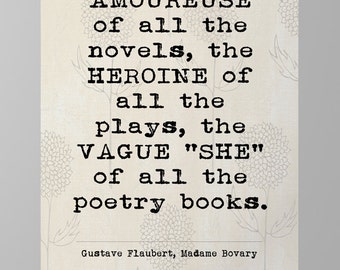
- Quote:https://img0.etsystatic.com/046/1/10422774/il_340x270.734538018_m84o.jpg

Thursday, November 24, 2016

Book #5: Moby Dick

Setting the Stage
            “I know it’s kind of cliché to pick Moby Dick as your first Melville, but…” says Rory Gilmore as Dean asks her how she is liking Moby Dick. Dean gets kudo points for asking Rory about the books she is reading (take some hints boys) and begins the first Rory’s three relationships

But, back to Moby Dick…What a feat for sophomore in high school, right? It is perhaps regarded as one of the longest in the American cannon. While not long in page numbers, the writing style can be difficult to follow and story is drawn out and dry at times. Many people groan at the thought of reading Moby Dick, but I believe people should take a chance on it. It isn’t as overwhelming and dry as one might think.

Is it cliché to read Moby Dick as your first Melville? I do not think so. Moby Dick is his most well known and well regarded book so why not start there? There is a reason that this is the book he is remembered for and not his others. I guess Moby Dick is my first official Melville. However, I did read the stage adaptation of Billy Budd as my venture into reading all the books in my high school’s book room (I will have to explain this to you all at some other point).

What is the great American novel?
This question always brings up so much debate. Is the great American novel Huck Finn? Is it Moby Dick? Is it The Great Gatsby? Many people will insert their idea on what they think the great Huck Finn is an example of one of the greatest satirical works in American literature? Maybe Moby Dick is an example of one of the greatest uses of metaphor in American literature? And, maybe, The Great Gatsby best shows how Americans felt during the height of the Lost Generation? Each novel serves a purpose and shines a light where needed by the American people when they read it.
American novel is, but, frankly, it is a matter of opinion. It is my personal belief that there is not ONE great American novel, but many. How are we supposed to claim one novel as the greatest one in our country’s 200 plus years of existence? Maybe

Biblical Allusions
Given that I just taught allusions to my 10th grade students, I think it is fitting that I discuss them in this post. An allusion (with an “A” folks. We ain’t talking about illusions…) is a reference to a well known person, place, thing, or idea. Within literature, especially classic literature, the most common form of allusions is a biblical one. When reading Moby Dick, the most obvious biblical allusion is that of Jonah and the Whale. We are all familiar with the story of Jonah, whether in detail or not. Basically, Jonah is eaten by a whale for not doing exactly what God wanted him to do and has to fight his way out of the whale’s stomach. The story of Jonah could be read as a story of fighting against one’s fears and uncertainty similar to Moby Dick. The whale (Moby Dick) is Captain Ahab’s obsession and possibly his greatest fear (after all, the whale did make him lose his leg).  While not fighting his way out of the whale’s stomach, Captain Ahab is fighting his way out of the whale’s mental hold on him and the fear that holds him back.
            The Bible is perhaps the oldest source an author can allude to and contains may universal stories that appear across many faiths. Religion has been around since the history of the human race, but does that make it natural? Humans need something to believe in and Melville captures this in Moby Dick. Of course, he references Christianity and its stories, but he also provides examples of pagan religions and does not belittle them. Melville emphasizes the importance of having faith, but also presents the same emphasis on the natural, scientific world. By focusing on religious rituals of all faiths and scientific thought (his analysis of whales and almost textbook like description of them), Melville shows two theories of thought, which are often at odds, as compliments.

Where is it?
One of the biggest criticism’s of Moby Dick is that it takes until page 233 for Moby Dick to even be mentioned in the novel. It is quite frustrating because with a title like Moby Dick, one might expect the focus of the entire novel to be Moby Dick itself.  But the more you read, the more you realize that the point of the book is not the whale, but what the whale represents: the great unknown, the thing that keeps everybody moving forward, the goal that keeps you working hard. 

Novel? Textbook? Play? All of the Above?
What surprised me the most about this novel was its narrative structure. During the majority of the novel, the story was told through a first person perspective through the character of Ishmael. However, the novel contained stage directions. And, at times, it even included dialogue as in a script for a play. Then, without notice, it would switch to almost a textbook style of writing in which the author explained the science behind whales: different types of whales, what they looked like, they’re reproductive structures, what they ate, where they were located, etc. Melville included minuscule details about whales that are, overall, not very interesting to the reader. Why would Melville include this in his novel? More so, why would he change his narrative structure several times throughout his novel? While part of me (okay a lot of me) found the scientific/informative section of this book boring, I did like how he presented his story. The narrator Ishmael did not have access to all the events or all the necessary background information needed to make the reader understand all parts of the novel. Therefore, it was necessary to present this valuable information in another manner. Although sometimes it is tedious to read, part of the appeal of the book and why it so well regarded is because of the manner (or manners) in which it is written.

“For all men tragically great are made so through a certain morbidness.”

This quote stuck with me the most while reading this novel. If you look back at history or the greatest characters in literature, they are not heroes or strong because their lives were hunky-dory. Most of the time, at some point in their lives, they went through something dark or conquered some sort of hurdle which made them want to make a difference. Just think about it.


Pictures
- Book cover:https://s-media-cache-ak0.pinimg.com/originals/a6/60/44/a66044fca7735a735a6d11f4f978abc2.jpg
- Herman Melville: https://www.poets.org/sites/default/files/styles/286x289/public/images/biographies/HermanMelville_NewBioImage.jpg?itok=R51xUZIo
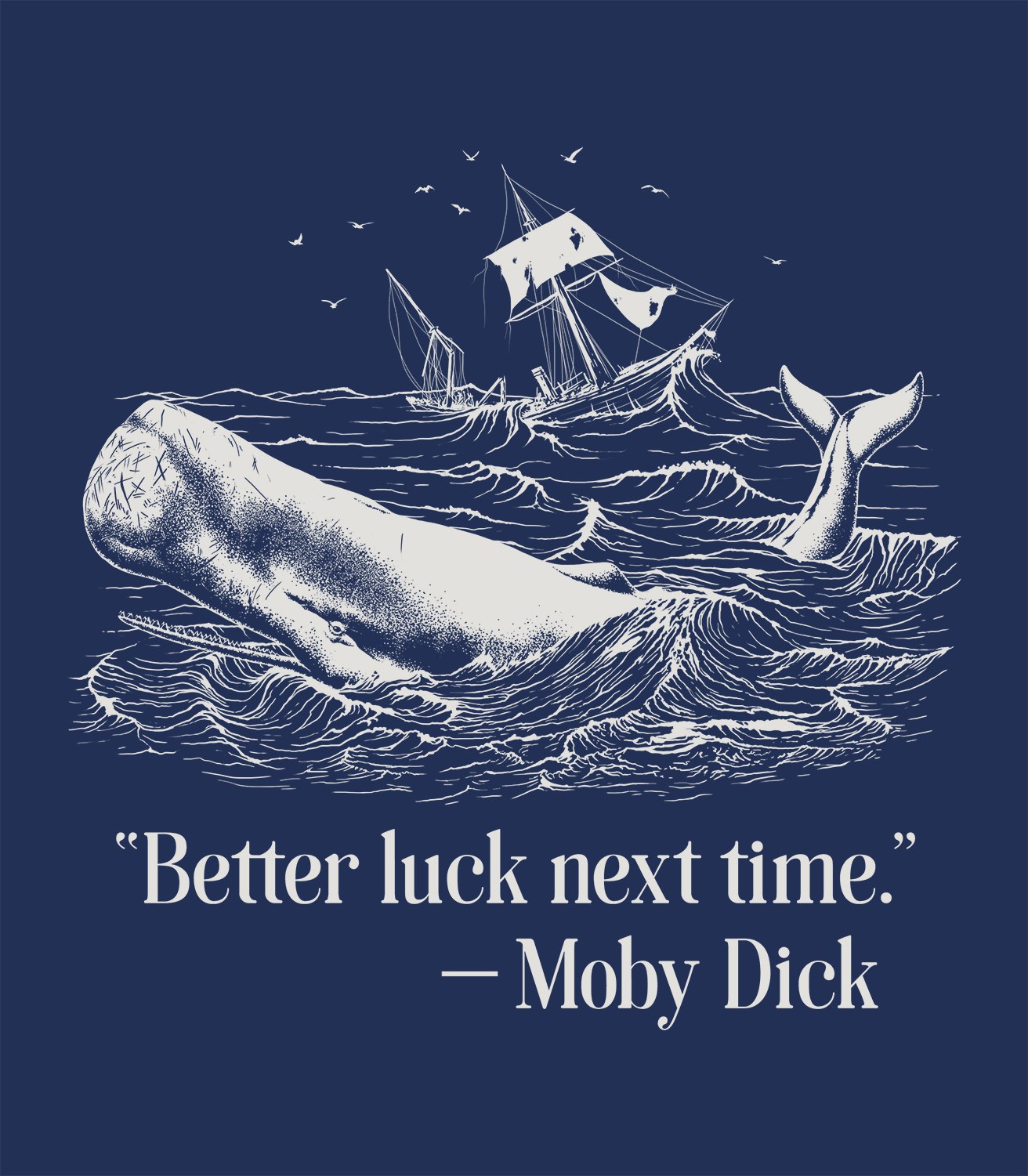
Quote:http://cdn2.headlineshirts.net/media/catalog/product/cache/3/image/9df78eab33525d08d6e5fb8d27136e95/m/o/mobydick-v1-1312.jpg

Friday, October 28, 2016

Book #4: The Second Sex by Simone de Beauvoir

What a better time in history to read a feminist text than now? In a few short months, we may have our first female president and more women are taking charge in fields across the board. Gilmore Girls itself could be considered a feminist text, although not to the same extent as The Second Sex which has been coined “The Feminist Bible.” I have had some experience reading feminist texts and even took a Women’s History course in college in which I had tor read The Feminine Mystique. Although this book was not my specific cup of tea (it was eight hundred something pages long with no plot), I can appreciate it as an important historical text and one that paved the way for the feminist movement.

What does it mean to be a feminist?
The topic of feminism and being a feminist can cause quite a controversy. In the media, there are celebrities calling each other out left and right for not living up to the feminist name Because they have different ideas of what feminism is, they may disagree with each other. Oftentimes, I find these arguments trivia;. If someone is willing to call themselves a feminist and believes in the equality of the genders, why would someone propel a conflict that only causes more of a problem? After all, aren’t we working towards getting along?  Merriam Webster defines feminism as “the belief that men and women should have equal rights and opportunities.” Therefore, feminism doesn’t have to be the bra burning, non shaving stereotype. Feminism is believing that women and men are equal in all regards. I am one to admit that men and women are not always treated equally in our modern world. I see it every day as a 24 year old woman in the workforce. There are certain ways people talk to me that would be different if I were a man.

Be a Free Woman
One of my favorite quotes from de Beuvior is “free women may refuse to be owned without wanting to renounce her yearning to be possessed. To me, this seems like a paradox. How can a free woman refuse to be owned yet still want to be possessed? As a free woman, you have to choice to do what
you want to do with your life and who you want to have in your life. A woman can still be free and have agency over their life but have that one person they allow to call them “theirs.” This compromise is a difficult one for both genders. How do you keep your individuality while building a life with someone? I’m not sure. I haven’t worked that out yet

A Broad Overview
Symone De Beuvior touches on various subjects throughout her eight hundred page book. Many of these subjects are still ones that are discussed today.
            -Why is it an insult to call someone a woman? People cringe when someone says “You run like a girl!” It automatically has a negative connotation when it should be a positive thing because us girls run fast!
            -Men are considered the taker while women are considered the taken. Why can’t       women be the takers? Or the pursuers in a relationship? If a woman comes onto a man, it is typically considered unattractive. This has changed slightly over the years, but not enough for this thought to   completely dissipate.
            - Woman as the Other. “The Other” is often the foreigner, the savage, and the unknown in literature. It is considered unnatural and inhuman in these stories. Women were considered the unknown, almost lesser creatures in de  Beuvoir’s time. Maybe men were just confused by women because we are so highly intelligent that they couldn’t understand.
            -Men want women pure, but not past a certain age. Men want women pure and untouched, but they also want her seen as desirable. To be desirable, they have to be touched by another man and interact with other men. However, the moment she is seen interacting with men, she is             considered a whore and is unwanted. It is a double standard that is still around today.
            -Marriage is the epitome of adulthood. Women are not fully considered an adult until they find a husband. Once a woman hits a certain age (her early twenties, directly after college), people pressure them to find a husband. If   they are single, people give you a pitiful loo
k and say your time will come someday. They do not treat men this way. They are expected to be single and play the field and if they are single in their twenties, people do not pity them.
It is frustrating because our lives are not defined by having a man.


As a young millennial woman, I felt like this was a beneficial text to read as it propelled self-reflection. It made me think of what it meant to be a woman. Many of the situations she talks about in her book are still prevalent in the 21st century just in a different way. She was also very forward thinking for the 1940s. She wasn’t afraid to talk about touchy topics such as sex and female masturbation. Furthermore, she never married or had children of her own, yet her life seem fulfilled, something that was very rare in her time period.


First picture:https://s-media-cache-ak0.pinimg.com/originals/d4/5f/e0/d45fe0719a0ee761cc837322328ba907.jpg
Second picture: https://s-media-cache-ak0.pinimg.com/736x/bb/f9/1d/bbf91dab9daca045bc030e3cd9928f74.jpg
Third picture:https://s-media-cache-ak0.pinimg.com/236x/02/44/9f/02449f204d7762401ba1840ec3b1cabc.jpg