Sunday, May 6, 2018

Books #28 and #29: Ethan Frome and The Age of Innocence by Edith Wharton

There is a discrepancy amongst the “official” lists of Rory’s Book Challenge as to which Edith Wharton novels are mentioned amongst the show. Most lists name Wharton’s novella Ethan Frome as mentioned on the show. However, only some lists have The Age of Innocence listed. In actuality, Wharton’s name is only mentioned in episode 6 when Lorelai says to her mother: “I think Edith Wharton would’ve been proud, and busy taking notes.” Knowing that Emily Gilmore is the epitome of the upper class New England world, it makes more sense that Lorelai is referencing Wharton’s Pulitzer Prize winning novel, The Age of Innocence, rather than the rural love story gone wrong in Ethan Frome. It made sense for me to combine these two books into one post. Despite the vast difference in setting, these two books comment on the same theme; a theme that is very prevalent in Gilmore Girls.

Ethan Frome

            I read Ethan Frome about two years ago as I was making my way through my school’s book room. It was also the only Wharton work that is on the high school reading list. The novella follows a man (Ethan Frome) as he falls in love with his sickly wife’s caretaker. He is torn between doing the right thing (staying with his wife) or his desire (running off with the caretaker, Mattie). To jump to the chase here (SPOILER ALERT), Mattie concocts a plan in which the two of them would commit suicide by sledding into a tree. Unfortunately (fortunately?) Ethan and Mattie survive the sledding accident, but Ethan earns a lingering limp and Mattie becomes permanently paralyzed. Zeenie, Ethan’s previously sickly wife, ironically now becomes their caretaker as her sickness was previously psychological. Dramatic, huh? Ethan Frome is an outlier amongst Wharton’s works. Wharton predominantly wrote about the upper class and high society. This novella was her attempt at naturalism, a trend in literature popular at the time. I would argue that Ethan Frome isn’t exactly naturalism; it is the same as all of Wharton’s other stories in that the protagonist struggles with his desires versus his expectations. This brings me to…

The Age of Innocence

            My only other experience with Wharton before this novel was The House of Mirth which I read during the American Realism course I took my junior year of course. Reading The Age of Innocence brought me back to reading this novel. Both took place in the upper class society of New York City during the turn of the twentieth century. Again, both novels dealt with the protagonist struggling with the expectations of society and their own personal desires. It seems like dear Edith may have been struggling with acting on her desires. It makes sense, as it seems as if every work of hers deals with this theme. And, after all, writers do tend to write about their personal feelings and experiences even if they put them in a fictional world.  This novel follows Newland Archer who is engaged to a woman named May. When May’s rebellious cousin Ellen returns from a failed marriage abroad, Newland falls in love with her. The novel focuses on Newland’s desire for Ellen but his duty to May. Sounds familiar right? But Newland does not give into his desires like Ethan does; he marries May (though Ellen is the one to convince him to do so) and stays faithful to her throughout their marriage. May eventually dies twenty-six years later and Newland has the opportunity to see Ellen again, but he chooses not to. It is an interesting choice as Newland could now be with Ellen without the guilt of betraying May. But who is to say that his relationship with Ellen would be the same as it was twenty-six years ago? Perhaps their timing has passed and Newland knows this. There are a million different reasons why Newland would feel hesitant, but if you had a second chance at being with the person you love, wouldn't you take it? Maybe Newland wanted to live in fantasyland and knew the relationship with Ellen that he played in his head could never be the same in real life. He didn’t want the real thing to disappoint him so it was safer to walk away from reality. It’s logical reasoning but the coward’s way out.

            So it makes sense that Lorelai would refer to Edith Wharton when stepping into her mother’s world; the world she left behind to pursue her own desires. When she had Rory and left for Stars Hollow, she left behind the life she was supposed to live and went to fulfill her own dreams.
           

            Why can’t our duty be to fulfill our dreams? I guess it is easier said than done. There are other people's’ feelings at play and practicalities to consider. But wouldn’t life be so much easier if we just followed our heart?


Also, Liam Neeson plays Ethan in the movie version of Ethan Frome and we all know how I feel about Liam Neeson 😜

Pictures
Ethan Frome Book Cover:https://swh-826d.kxcdn.com/wp-content/uploads/2011/05/Ethan-Frome.jpg
The Age of Innocence Book Cover:http://covers.feedbooks.net/book/93.jpg?size=large&t=1491307669

Wednesday, April 4, 2018

Book #27: Finnegan's Wake by James Joyce

Finnegan’s Wake. Oh boy. I don’t know why I did this to myself. If you are a literary fiend, like me, you are well aware that Finnegan’s Wake is considered one of the most difficult books to read in the English language (if you can call what you are reading English). I would take War and Peace AND David Copperfield over this book any day and that is really saying something.

It has taken me awhile to get to writing this post. For one, it took me a good long month (or two) to get through Finnegan’s Wake. After that, well,…I procrastinated. I am not going to lie, I was
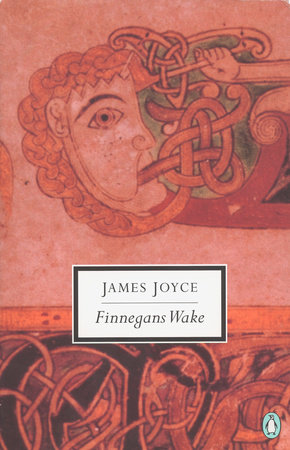
The cover of my copy of Finnegan's Wake
just like my students and just could not get myself motivated to write this post. I enjoy writing, but when I do not enjoy what I am writing about (or if I don’t have a firm deadline), it can be hard for me to find the motivation. Plus, I had no idea what I would write about for this post since I had no idea what was going on throughout this entire novel. I can’t even give you a decent summary of the plot of the novel because I couldn’t make any sense of it. You should see the notes I took; it looks like I was studying a foreign language. And in a way I was.

In Gilmore Girls, Rory is not actually seen reading Finnegan’s Wake. Instead, it is alluded to in the title of episode 5, “Cinnamon’s Wake” in reference to Babet’s dead cat. I suppose I didn’t actually have to read the novel because it is not actually seen or mentioned in the show, but I can not leave any page unturned! (Ha, see what I did there?) Plus, I got to one up Rory and read one of the most difficult books out there.

I guess to put it simply, Finnegan’s Wake is about the death of a man named Finnegan and the Earwicker family’s secrets. At least, that's what I think it is about. From what I could gather, there were secret affairs, incest, and warring brothers. Not quite sure since James Joyce created his own language while writing this novel. He created new words, smushed words together, and randomly inserted words from another language. In order to fully understand this novel, one would have the break down the entire novel word for word and analyze the meaning of each specific word. Who has time for that? I don't. So I just read it for what it was and took from it what I could.
 
Just so you all know I am not exaggerating the difficulty
of  this text

I just have to wonder if this book would still be considered a classic high end novel if it was written in readable English. If it was discernible, would the plot be any good? If the story wasn’t clouded by the idiosyncratic language, would it be good writing? I don’t know. James Joyce has a good reputation as a strong writer and already had a name for himself when he wrote this novel. The book probably succeeded because Joyce already had a good reputation and a fan base. People probably saw his name attached to the novel and would automatically think “Oh, James Joyce! This must be good!” Much like how people see J.K Rowling and automatically think The Casual Vacancy is going to be good. So the moral of the story for this read is that just because something is labeled as classic literature, a bestseller, or has a name attached to it, does not necessarily mean that a book is good and enjoyable.


Just so you know, episode 5 of Gilmore Girls has one of my all time favorite lines:

Sunday, March 4, 2018

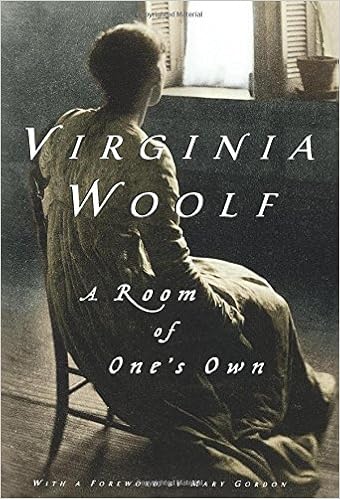
Book #26: A Room of One's Own by Virginia Woolf

Virginia Woolf. Rory is seen reading Woolf’s monumental text A Room of One’s Own in episode five while waiting for her bus to Chilton. Just some light reading, huh? Virginia Woolf is commonly associated with helping inspire feminism and is known for her novels and essays related to the topic. While she is known for being a feminist, she is also known for being a prominent writer of the modernist movement.    
            I first read Virginia Woolf in college. I heard about her in high school and read Who’s Afraid of Virginia Woolf? (which is not about Virginia Woolf at all despite her name being in the title), but never read her during that time. During my sophomore year, I read her novel To the Lighthouse in a modernist literature class. Honestly, it did not resonate with me; it felt like I was in a fog while reading it. This might have something to do with the whole stream of consciousness thing. Anywho…I read A Room of One’s Own a year later in my Women in Modern Western History class. I remembered enough of the text to not reread it again.

        When I hear the name Virginia Woolf, I recall how my mentor teacher in student-teaching had an entire unit she dubbed the “crazy chicks unit” which included texts by Virginia Woolf, Sylvia Plath, and Charlotte Perkins Gilman. While the title may be insensitive, it did grab our students’ attention and that is something that can be difficult to do in a high school English classroom. It’s a shame that Virginia Woolf is often thought of as crazy because she had a mental illness that she didn’t know how to deal with. This eventually caused her to kill herself by putting rocks in her dress and drowning herself in a river. It makes you wonder how people would view her works if her mental illness was not in the back of everyone’s mind.
            A Room of One’s Own is a nonfiction text that is based on several lectures Woolf delivered across different colleges. Woolf claims in this text that “a woman must have money and a room of her own if she is to write fiction.” The entirety of this text builds upon this point. She questions if there could be a female Shakespeare if women were given the same opportunities as men. This is a valid point. Imagine the caliber of stories, plays, poems, and essays we could have in world literature if more women were given the opportunities to develop their talents. So many talented female writers faded into oblivion because they were never taught to read and write.    

            I agree with Woolf’s claim. I need my own space to be able to write. When other people are around or aware that I am working on writing something, I freeze up. It is almost too much pressure. I need my alone time to write because writing is a personal process. Even though I share what I write, the process of writing it is something that I need to do on my own. It is a commitment I have with myself. I am able to have this commitment with myself because I have money to support myself and my basic needs. If I did not have means to support myself, I would not have time to write and therefore it would not be a priority. 
            Not every woman has this opportunity today. It is sad that equality is something we are still fighting for. Women may have their own rooms today, but money is not a guarantee. In many fields, women are paid less than their male counterparts. This has definitely been put in the forefront lately due to the Time’s Up movement in Hollywood and the sexual harassment claims following suit. It is very clear that many women have dealt with some sort of sexual harassment in their life or have been treated in a certain manner because of their gender. We still have a lot to do to make Virginia Woolf pleased, but at least we have our own rooms. 

Images
- Author Portrait:  https://upload.wikimedia.org/wikipedia/commons/0/0b/George_Charles_Beresford_-_Virginia_Woolf_in_1902_-_Restoration.jpg- Book Cover: https://images-na.ssl-images-amazon.com/images/I/51oa5lhpGvL._SX338_BO1,204,203,200_.jpg
- Vintage Book Cover:https://onehundredpages.files.wordpress.com/2017/01/111.jpg?w=637&h=989

Tuesday, February 13, 2018

Book #25: Valley of the Dolls by Jacqueline Susann

What I love about the Rory Gilmore Book Challenge is that it is full of classic novels from various countries and throughout history, but is also composed of bestsellers that, well, may not be considered highly intellectual novels. In my opinion, just because a book is not considered “literary” does not mean that it is not a good book. It is a matter of opinion. People should read what they want to read whether it is something “literary” or something “light.” The novel Valley of the Dolls by Jacqueline Susann falls in the latter category, but it is also considered a classic novel in terms of its influence and commentary on society.
Cover of the edition I read
            Lorelai is the one to make a reference to Valley of Dolls (the movie version though) in passing to Babette. This is exactly the type of story that Lorelai would reference because it is just enough controversial by name without many people knowing exactly why. Valley of the Dolls touches on a lot of taboo topics such as sex and drug abuse all why taking place in the entertainment industry from the 1940s through the 1960s. It follows three young women as they rise to success in this industry, but the more they succeed, the more they fall apart.

I’m going to break this post down by each of the three main characters:

Anne
            The novel begins through the character of Anne and throughout the course of the story, she is the one we keep returning to. She is the connecting piece of the novel and propels the plot forward even when the chapter isn’t in her name. Anne is a natural beauty who enjoys her work being a secretary for an entertainment lawyer. In the beginning of the novel, she goes on casual dates with a man named Allen. She has no romantic interest in Allen; she just simply enjoys his company. Allen, though, is head over heels for Anne and asks her to marry him. The problem is Anne never says yes to his proposal. Allen just assumes that she will marry him and she will eventually give in. Whenever Anne says that she does not love him and does not want to marry him, Allen scoffs and basically says “that doesn’t matter.” It irks me that her wants and her desires are laughed at and seen as unimportant. Allen only breaks off his “engagement” to Anne when she begins an affair with her office crush Lyon.
            For some reason, Anne is drawn to Lyon even though he is pretty much the definition of a player. Anne and Lyon have a love affair that is on and off throughout many decades. She has relationships with other men, but Lyon is the one she always returns to. I have many issues with Anne and her love of Lyon, but I am one to talk since I do not have the best look with guys. My issue is that despite knowing that Lyon is having multiple affairs, Anne does not leave him and still thinks that she cannot do any better. It is a sad way to end her story (sorry for the spoiler, but I’m sure you knew there weren’t going to be any happy endings). Everyone deserves to be with someone who is crazy about them and good to them, but sometimes we see ourselves as undeserving. Maybe because Anne spent so much time invested in Lyon, she felt like she had to stay with him or she doesn’t know who she is without wanting him. Maybe she just wants to have someone and she feels that she is too old to find someone new (this idea of aging will come up again later). It is sad because Anne was so self-assured in the beginning of the novel, but the more success she had, the more she began to doubt herself.
 
Look at that hair!
Jennifer
            I feel some sympathy for Jennifer since I am also a baby-faced woman whom people underestimate. However, I lost most sympathy for her as the novel goes on and it is revealed she has had about seven abortions and refuses to have a mastectomy (she had breast cancer) because she doesn’t want to lose her boobs. She is literally one of the most vain characters in all of literature. It begins with little things such as lying about her age, but progresses to basically committing suicide because she doesn’t want to lose being desired by men. What is sad, though, is her husband is the same way and perpetuates this. He would rather her have her large bosom than to be healthy. I’m sorry. I would definitely choose my health over my boobs any day. Just saying. Jennifer becomes so unhappy and dependent on people telling her she is pretty that she never realizes her own worth within.
            This is definitely something we struggle with in our society. Looks and appearances matter too much.  I care how I look, but my friends can tell you that I don’t do too much make up wise besides concealer and mascara. It takes me about two minutes to do my entire makeup routine in the morning. On nights out, it takes me about five minutes. I’m not a slob; I just prefer the natural look. The women in this novel care more about the outer appearance than how they feel about themselves on the inside and this is sad to me.

Neely
            Neely is definitely the least likable character in this novel. Neely flies under the radar in the beginning of the novel. She’s just an innocent teenager who wants to succeed in show
business and find love. She turns into a conniving adulterous selfish woman. She betrays all of her friends even sleeping with her supposed best friend’s husband repeatedly and purposely overdoses on “dolls” (aka drugs) so her employers will feel sorry for her and not fire her. She reaches the highest level of success in show business, but the more success she has, the more she loses her humanity. There is no redemption for Neely by the end. There is actually no redemption for any of the characters.


Even though the three main characters were unlikable, shallow, and lacking substance, I still found this book enjoyable. It was “light,” but with a dark twist. The entertainment industry is something that fascinates many people which is why Hollywood is such a draw. This story draws on this and succeeds in making you see the flaws in an industry that many people day dream of taking part in. I love a soapy, scandalous read. It was a nice change from all the Shakespeare.

Pictures
-Book Cover: https://images-na.ssl-images-amazon.com/images/I/81YS9egzy2L.jpg
- Movie Poster: 
https://images-na.ssl-images-amazon.com/images/I/91qhPW+HSQL._RI_.jpg
- Cover:https://cassandraparkin.files.wordpress.com/2011/10/valley-of-the-dolls-cover1.jpg